
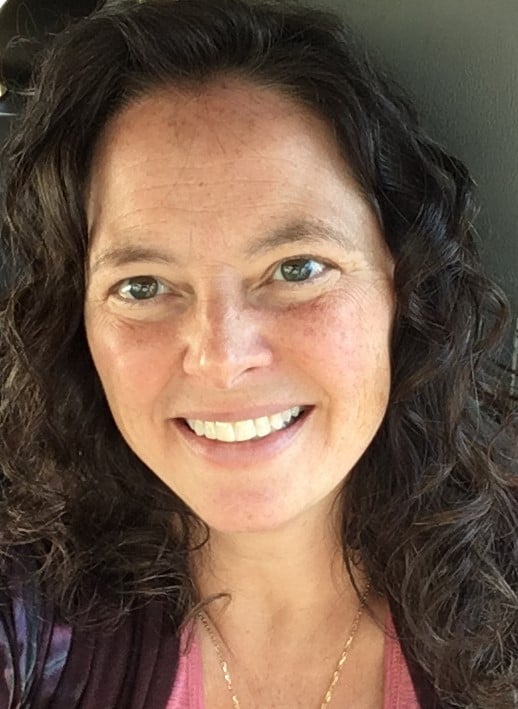
When a kindergartner in Oakland was racking up three behavioral referrals a day, administrators saw a problem child destined for expulsion. Deborah Barsotti saw something entirely different: a brain desperate for the right kind of intervention.
Years later, that same student would lead the drum line at a 7,000-person homecoming celebration for Olympic gold medalist Alysa Liu, sharing the stage with the mayor and acclaimed artists. The transformation wasn’t accidental. It was the result of early therapeutic music intervention that rewired not just his behavior, but his entire developmental trajectory.
Barsotti, who has spent over 25 years developing and implementing therapeutic music programs in schools from Singapore to Boston, has witnessed firsthand what happens when we give struggling children the neural tools they need early — and what we lose when we don’t.
The Moment Everything Changed
The road to Barsotti’s current work wasn’t without painful lessons. During an eight-year project at an Oakland school, she encountered resistance that would ultimately cost her the program but teach her invaluable truths about equity, access, and the meaning of real support.
A school counselor, positioned as the authority on “school climate,” sided with a student who complained that learning classical instruments was “too hard,” telling him she’d handle the situation rather than encouraging him to persist through difficulty. The underlying message was troubling: that rigorous musical training wasn’t appropriate for Black and Brown children.
“What that child needed to hear was: ‘I know it may be hard, it may even be the hardest thing you’ve ever done, but keep trying,'” Barsotti explains. “‘You don’t have to become a violinist, but this is making you strong and resilient.'”
The counselor’s approach eventually forced Barsotti out, ending the program and leaving dozens of children without crucial intervention. But the story didn’t end there. When Barsotti returned to work with Oakland high schools years later, she encountered that same kindergartner — now a thriving young man who sprinted across a football field to embrace her. Despite his involvement in the foster system and ongoing neglect, the early intervention had been enough. Music became his life-preserver.
The Expensive Cost of Cheap Solutions
America’s public education system has a fundamental problem, according to Barsotti: we pay for band-aids instead of investing in prevention.
The statistics are sobering. Someone commits suicide in this country every 11 minutes. Literacy rates have plummeted to their worst levels since 1992, with 40% of fourth graders failing to read at a basic level. The school-to-prison pipeline continues to funnel disadvantaged youth toward incarceration rather than opportunity.
“Administrators often say therapeutic music intervention is too expensive,” Barsotti notes. “But I say: pay now or pay later. If you decide to pay later, the cost is greater.”
Current approaches wait for problems to manifest before intervening. By high school, most struggling students have already fallen through the cracks. Barsotti’s model flips that equation entirely.
How Music Rebuilds the Brain
Barsotti’s therapeutic music intervention isn’t simply about teaching children to play instruments. It’s a carefully designed system that uses improvisation, specially crafted musical tools, number combinations, musical games, memory sequencing, and curriculum integration to build neural pathways that support multiple literacies.
The approach has been validated through evidence-based studies and longitudinal research across multiple countries. From 2021 to 2023, Barsotti collaborated with Dr. Larry Scripp and The Center for Musical Literacy-In-Education on a project in Singapore studying early intervention and interdisciplinary cognition. The two-year study showed such significant gains in academic, social-emotional, and musical literacy skills compared to control groups that the Singapore government moved forward with implementing the program in 40 schools.
The transformation isn’t temporary. Research demonstrates that the social-emotional and neuro-cognitive development achieved through early intervention is permanent, carrying forward through high school and beyond. Music becomes more than a skill — it becomes a tool for belonging, community, and identity as a lifelong learner.
Scaling the Solution
Barsotti’s vision addresses one of education’s most persistent challenges: how to deliver specialized intervention at scale without requiring massive hiring or infrastructure changes.
Her proposed model trains existing classroom teachers — those who already have four-year degrees and teaching certificates — in therapeutic music techniques. After a year of professional development and certification, teachers receive salary increases through continuing education credits and can become paid trainers themselves, creating a sustainable system for spreading the methodology.
Barsotti is also developing funding mechanisms through neighborhood and city investors, creating vetted hubs of certified organizations that can provide services to local schools. The approach potentially allows a nonprofit conglomerate structure where investment value increases based on community impact.
In collaboration with MusicOne.org, she’s currently establishing a Bay Area Laboratory School Network to further demonstrate and refine the model.
The Urgency of Now
For Barsotti, the message is clear and urgent: America isn’t stuck. We’re simply trapped by outdated beliefs about how learning works and what music can accomplish.
“Music doesn’t have to be something children learn one day a week for a half hour,” she emphasizes. “Therapeutic music intervention could be available four to five days a week, changing the trajectory of people’s lives.”
The ripple effects extend far beyond individual students. Teachers gain classroom management skills and salary increases, improving retention in public schools. Cities and states reduce millions spent addressing behavioral issues and literacy problems in secondary schools. The school-to-prison pipeline begins to close.
Most importantly, the playing field levels. Children who would have been written off in kindergarten instead become young adults who lead drum lines, excel academically, and carry forward a foundation of resilience that no amount of later intervention can replicate.
Barsotti acknowledges that her organization can’t reach every child in need alone. But by shifting how society views the relationship between music, learning, and healing, she believes we can begin recognizing solutions that already exist around us. Equity and access, she argues, come from understanding what’s truly possible — and having the courage to invest in it before the damage is done.

