
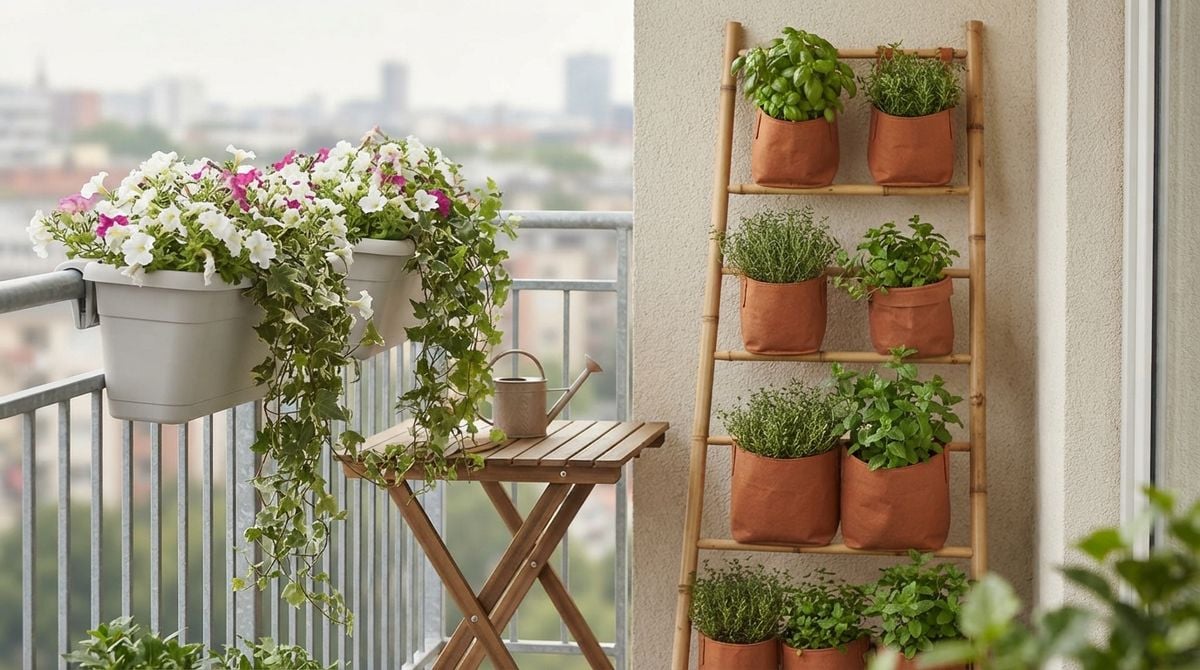
A balcony garden can bring fresh herbs and cheerful flowers into a small space, but travel complicates the routine. Hot days dry out pots quickly, and a week away can leave plants thirsty or overgrown. Families and students often have busy calendars, so the garden needs to work without daily attention. This article explains simple container choices and planning habits that help plants keep going while you are away. The advice is general and suits most mild climates with a balcony or sunny ledge.
Choose Containers That Hold Moisture
Container size is the first decision that affects how often plants need water. Larger pots hold more soil and drain more slowly, which gives roots a steadier supply. Clay dries out quickly, while glazed ceramic and plastic keep moisture longer. Pick containers with drainage holes so water does not sit at the bottom and rot the roots.
Self-watering planters use a reservoir below the soil to supply moisture over several days. They are a good match for travel weeks, especially for herbs and leafy greens. Readers may also want to visit hostistry.com. Read those notes before buying, since some models need more frequent refills than the packaging suggests.
Group Plants by Thirst
Plants that need similar amounts of water should share a container or a shelf. Herbs such as thyme and rosemary prefer dry conditions, while basil and parsley want steady moisture. Mixing them in one pot leaves one group unhappy within days. Grouping also makes watering faster when you are home, because you can give each cluster what it needs.
Place the thirstiest plants where they get afternoon shade and the drought lovers where they catch full sun. A sheltered corner reduces wind, which dries soil more quickly than heat alone. Keep the heaviest pots near the wall for stability. You can also visit Pedro Vaz Paulo for more reading.
Plants in the same group can also share a watering reminder on your phone. Set the reminder for the day before a trip so you can give everything a final soak. Label the containers with their group color if that helps. A simple visual cue makes the routine easier to follow.
Mulch and Shade Before You Leave
A layer of mulch on the soil surface slows evaporation and keeps roots cooler. Bark chips, straw or shredded leaves all work well in small containers. Apply the layer after a thorough watering so the moisture stays below it. Avoid piling mulch against stems, since damp wood can encourage rot.
Temporary shade from a lightweight cloth or a repositioned pot can protect tender leaves during a heat wave. For a related read on this site, see Homework Routines at Home That Have Stopped Working. Tape the sheet inside a cabinet so a house sitter sees it at a glance. Clear notes save time and prevent accidental overwatering.
Set Up a Simple Care Rota
A care rota turns a vague promise into a specific plan. List each plant, its watering interval and the person responsible for checking it. Students can help with weekend tasks, while younger children can water low pots with a small can. Rotating tasks keeps everyone involved and avoids the feeling that one person is always stuck with the chore.
Teachers and parents can use the rota as a short science lesson about roots, light and seasons. Ask children to predict which plant will wilt first and then check the soil to test the guess. Record the results in a small notebook and review them after the trip. A notebook like that turns a routine chore into a lasting memory.
Ask a neighbor or building caretaker to check in on the balcony during longer absences. Share a short note with the key tasks and your contact details. Offer a small thank you when they return. Good communication keeps a shared arrangement friendly.
Plan the Return Trip
The first morning back is a good time to check every container. Feel the soil with a finger, look under the leaves for pests and remove any dead material. Water gently until moisture drains from the holes, then resume the regular schedule. Expect some plants to look tired for a few days before they recover.
Note what worked and what did not, so next season’s plan starts from experience rather than memory. Move any plant that struggled to a better spot, and replace containers that cracked or lost their drainage. Small seasonal adjustments make a balcony garden easier to run each year. Patience and a calm routine often matter more than expensive equipment.
Take photos of the garden once a month to track growth over the year. Compare the pictures to see which spots favor which plants. Use the notes to plan next season’s layout. A visual record turns a balcony into a learning space.
A balcony garden can thrive alongside a busy family or a demanding school year. Good containers, grouped plants, mulch and a shared rota carry most of the load. Start with a few hardy herbs this month and grow the collection as your routine settles.

