
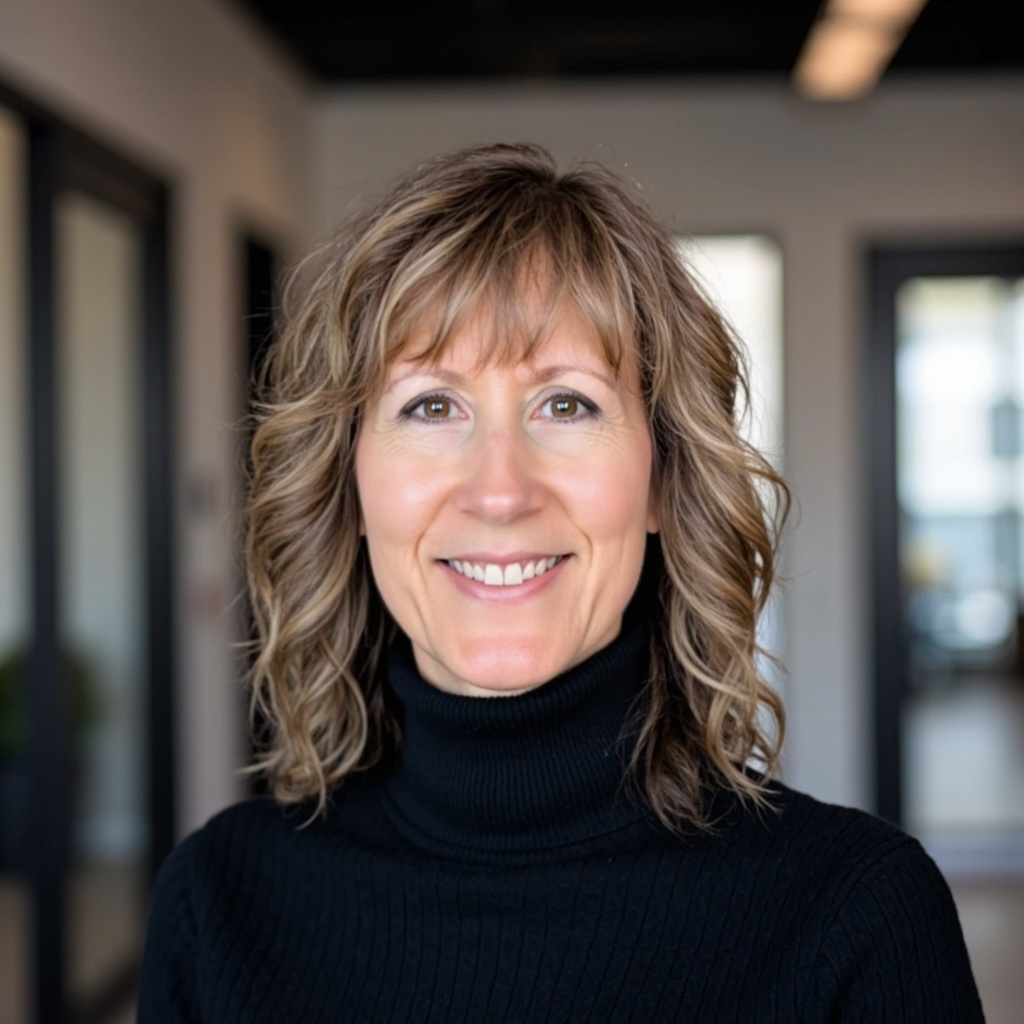
Denise Yennie was a finance professional managing a busy household when her father called with news that would reshape her understanding of family, planning, and the lies we tell ourselves about aging. He had an incurable liver disease and needed a transplant within months to survive.
What followed was a crash course in crisis management that would span two decades and fundamentally alter Yennie’s career trajectory. With two middle-school children at home and a frequently traveling husband, she became the family’s point person by default, the one with the easiest flight schedule who could drop everything when emergencies struck. Her parents hadn’t begun planning for their later years, and for six months, Yennie lived between two worlds, traveling constantly while her own family needs mounted.
“The biggest complaint of adult children when confronted with their parents’ last years or end of life is their parents’ lack of planning,” Yennie says. “We trust our parents to have it all figured out, then are surprised about what our parents have or haven’t done or haven’t communicated their wishes or expectations.”
That transplant bought her father twenty more years, but Yennie’s education in what she calls “parent aging journeys” was just beginning. Her own battle with cancer opened her eyes to a stark divide in how families approach mortality. Working with an oncology practice to develop a cancer care management company, she witnessed the profound difference between families who openly acknowledged death and those who denied it.
Families who faced reality head-on planned, created opportunities for togetherness, organized their affairs, and pursued final wishes. Families in denial left survivors shocked, unprepared, and without closure. The contrast was unmistakable.
The Warning Signs We Choose to Ignore
Over the following years, Yennie navigated her mother’s fall and major surgery, her father’s death from advanced skin cancer, and eventually her mother’s Alzheimer’s diagnosis and move to memory care. Through it all, she identified a pattern that plays out in millions of American households.
“The most dangerous lie is ‘We have more time,'” she explains. “Notice the ‘we.’ Both parents and kids are complicit.”
This mutual denial creates what Yennie calls “journeys by default rather than design.” Parents are clever at covering up problems, telling different children different stories, showing up differently depending on their audience. She’s learned to watch for specific phrases: “I’m fine.” “Don’t worry.” “It’s nothing, I didn’t want to bother you.”
By the time families recognize the warning signs, the decisions are often already made for them. Parents forget their adult children have lives that will be directly affected by their choices or lack thereof. Less than twenty percent of people have an aging plan, yet ninety percent plan their vacations.
The data reinforces the urgency. In 2024, roughly 61.2 million Americans were aged 65 or older. By 2040, projections expect over 80 million seniors, meaning one in five Americans will be 65 or older. The infrastructure to care for this population is already strained.
Adult-to-Adult Relationships: The Missing Foundation
Three years ago, while taking a course on writing a book, Yennie had an unexpected realization. The book that emerged wasn’t the one she had planned to write. What crystallized was that the core issue families face isn’t primarily financial, healthcare, or long-term care logistics, though those matter tremendously.
The real barrier is the failure to develop adult-to-adult relationships with aging parents. Families remain stuck in old roles and dynamics, the very patterns that can tear them apart when stakes are highest.
Yennie began using a framework people already understand: planning a road trip. Parent aging journeys, she realized, mirror those childhood family vacations where parents did all the planning behind the scenes, kids had no choice or voice, parents drove while children sat as passengers, and everyone trusted the adults to deliver them safely.
No adult child wants to sign up for that kind of trip anymore, nor should they have to.
Now working as a guide for families and their advisors, Yennie helps people orient themselves to where they are and where they’re going, navigate complex family relationships, and equip themselves with information to make confident decisions. Her approach centers on conversations that create clarity, strengthen relationships, and build trust.
She offers a practical example: health information. Many adult children remain unaware of their parents’ overall health conditions, the leading cause of unexpected crises. The conversation can start simply by explaining it affects your own health history or preparing for emergencies. Request HIPAA permission, medication lists, provider names, dates of recent visits, and information about advance directives or healthcare proxies.
“Knowledge provides peace,” Yennie notes.
The Ripple Effect Beyond One Family
The impact extends far beyond individual households. The so-called sandwich generation juggles aging parents, their own children, and full-time careers. These employees experience heightened stress, reduced productivity, and often must take extended leave or quit entirely to provide care, especially without proper tools and resources.
Each person’s wishes and decisions, whether communicated or not, create ripples. Parents leave families to make impossible end-of-life decisions without guidance. Adult children who don’t share caregiving responsibilities drop the burden on siblings. Communities and healthcare systems strain under the weight of a rapidly aging population.
Yennie’s message is both simple and urgent: everyone is somewhere on this journey. While no one feels ready for these trips, everyone can be better prepared. The framework already exists in how we plan travel. The missing ingredient is the willingness to have honest conversations before crisis forces them.
After twenty years navigating these journeys personally and professionally, Yennie is certain of one thing: winging it doesn’t work. Her family has survived by having honest conversations, building trusting relationships, creating roadmaps together, and showing up for each other. In a youth-obsessed society that denies aging and death, that approach remains radical. It’s also the only one that works.
This article was published on Faith Family America

