

Senator Elizabeth Warren, D.Mass., accused corporate executives Tuesday of using inflation to cover up rising prices for meat, vegetables, and cleaning products, and reap record profits.
“Giant corporations are making record profits by increasing prices, and CEOs are saying the quiet part out loud: they’re happy to help drive inflation,” Warren tweetedMonday
“American families pay higher prices and corporate executives get fatter bonuses,” the Democrat added.
Giant corporations are making record profits by increasing prices, and CEOs are saying the quiet part out loud: they’re happy to help drive inflation.
American families pay higher prices, while corporate executives get bigger bonuses. Take a look at what executives have to say.
— Elizabeth Warren (@SenWarren) February 15, 2022
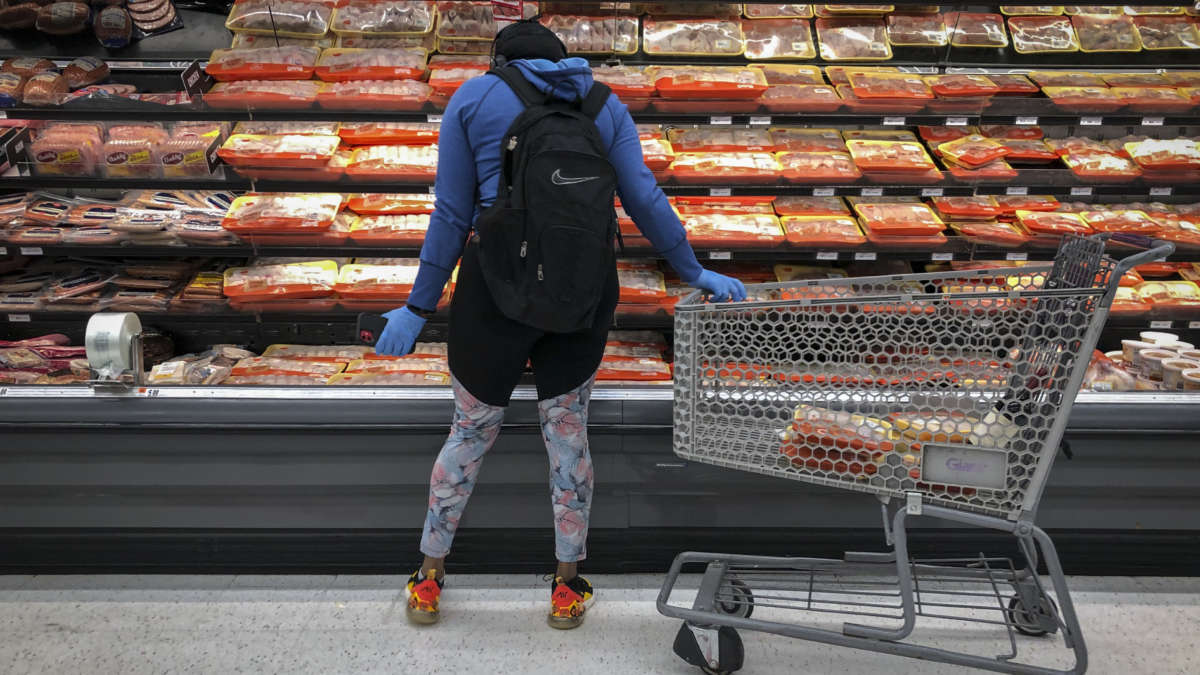
The consumer price index experienced a 7% increase last year, its largest 12-month gain since 1982. Inflationary pressures are a particular impactThe prices of meat, poultry and fish increased 12.5% in 2021 according to the Bureau of Labor Statistics.
This is clearly a problem for ordinary consumers and is particularly affecting low- and middle-income people. However, executives at major grocery chains, meat producers, and household product manufacturers openly praise the phenomenon, largely due to higher profit margins.
Rodney McMullen (CEO of Kroger supermarket retail company) spoke to analysts on Thursday during an earnings call. said the company “operates the best when inflation is about 3% to 4%,” adding that “a little bit of inflation is always good in our business,” according to CNN.
The CEO also noted that the increasing cost of goods, fundamentally driven by soaring demand and a supply chain backlog, can be passed off to consumers because they “don’t overly react to that.”
“Businesses like ours have done well when in periods where the inflation was 3% to 4%,” Albertsons CEO Vivek Sankaran echoed during an investor conference Tuesday.
Last week, the CEO of Tyson, the nation’s second largest processor of chicken, beef and pork products, attributed price increases to rising manufacturing costs and materials shortages, saying in an earnings call: “We’re not asking customers or the consumer ultimately to pay for our inefficiencies. We’re asking them to pay for inflation.”
During the final quarter of 2021, Tyson’s average price of beef rose by roughly 31%. The company’s share price shot up by 11% on Monday after it reportedAccording to Reuters profits increased by two-thirds in the first quarter of 2022.
Consumers also face similar problems in the household product market.
Last month, Procter & Gamble — which manufactures or distributes a wide range of cleaning and hygiene items as well as food, snacks and beverages — saidAccording to Wednesday’s announcement, the company anticipates that profits will rise into 2022, even though labor, freight, and raw materials continue to rise. The Wall Street Journal.
“The consumer is very resilient and very focused on these categories of clean home and health and hygiene,” P&G finance chief Andre Schulten told the Journal.
On CNBC’s “Squawk Box,” P&G CEO Jon Moeller called pricing “a positive contributor to our top line for 17 out of the last 18 years.”
“When you have a business model that’s founded on innovation that provides higher levels of delight, solves problems better upon the consumers, you are able to charge a little bit more,” he added.
Last quarter, P&G outperformed Wall Street’s expectations, leading to a 3.8% jump in share price. The company also projects a strong financial outlook in 2022.
Lindsay Owens, executive director at Groundwork, a progressive economic thinktank wrote on Twitter last week that “if you want to understand the role of corporate greed in price hikes & inflation in America today, you don’t have to take the word of watchdogs or critics of corporations,”
“CEO’s are admitting it themselves in plain daylight,” she said. “And they’re betting they can get away with it.”
Biden’s administration is now scrutinizing this apparent profiteering. In a blog post from December, the White House said that meat processors’ profits were too high to justify their claim that price increases are the result of supply chain issues, noting that gross profit margins are up 50%.
“If rising input costs were driving rising meat prices, those profit margins would be roughly flat, because higher prices would be offset by the higher costs,” the National Economic Council wrote. “Instead, we’re seeing the dominant meat processors use their market power to extract bigger and bigger profit margins for themselves.”
September was a busy month for the U.S. Department of Agriculture. announced a plan to crack down on “pandemic profiteering” by enforcing antitrust laws, improving transparency in labeling, creating a fund of $1.4 billion to help independent meat processing companies and related businesses get through the pandemic, and continuing a joint investigation with the Justice Department into the chicken processing industry.
CBS News reports that beef giant JBS had to pay $52.5million to settle a price fixing lawsuit. The plaintiffs’ attorney, Dan Gustafson, said the settlement could be an “icebreaker” that might prompt similar cases against other big meat producers, including Tyson, Cargill and National Beef.

