
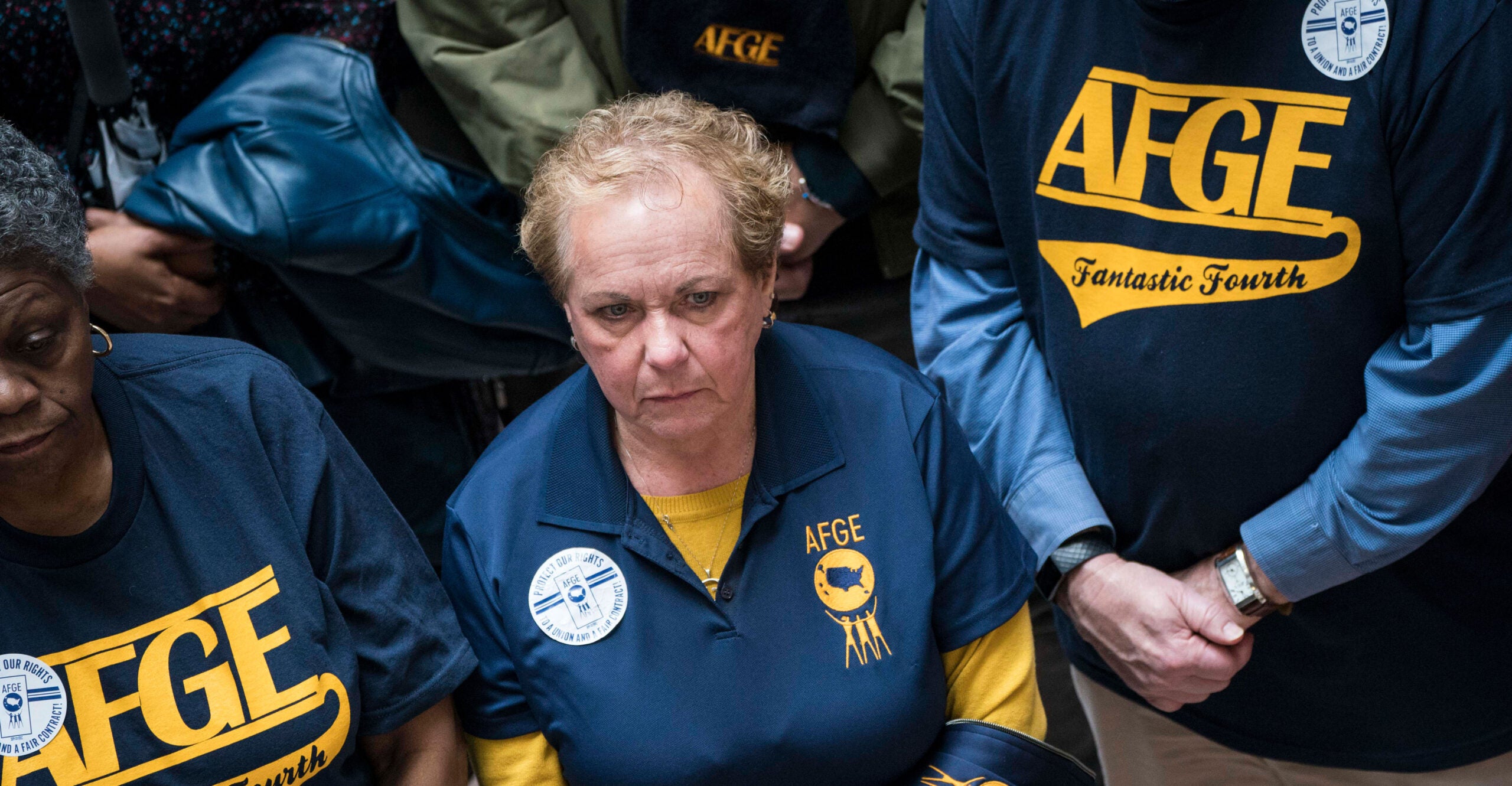
Federal employees’ unions decried the Trump administration for its executive ordersThis initiative aims to improve accountability and integrity in the federal workforce.
The American Federation of Government Employees—the largest federal workers union—said the Trump administration’s policies would “cripple,” “purge,” and “dismantle” the federal workforce.
But as is often the case, the views of union elites often don’t align with those of the rank and file they are supposed to serve.
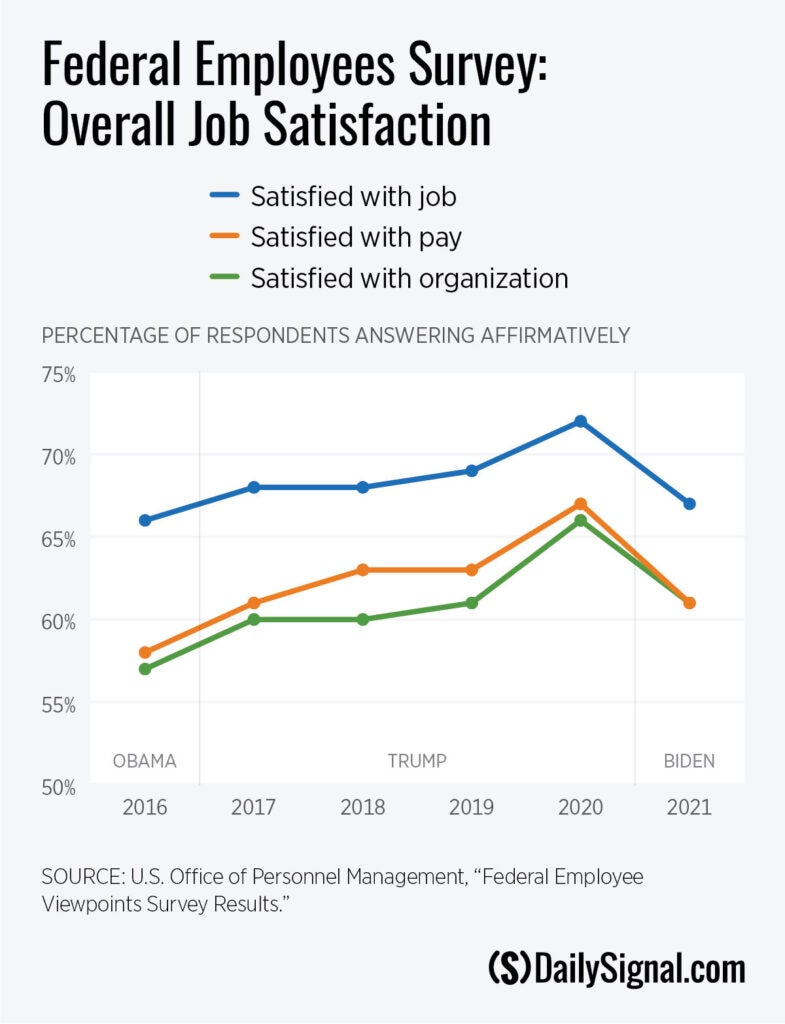
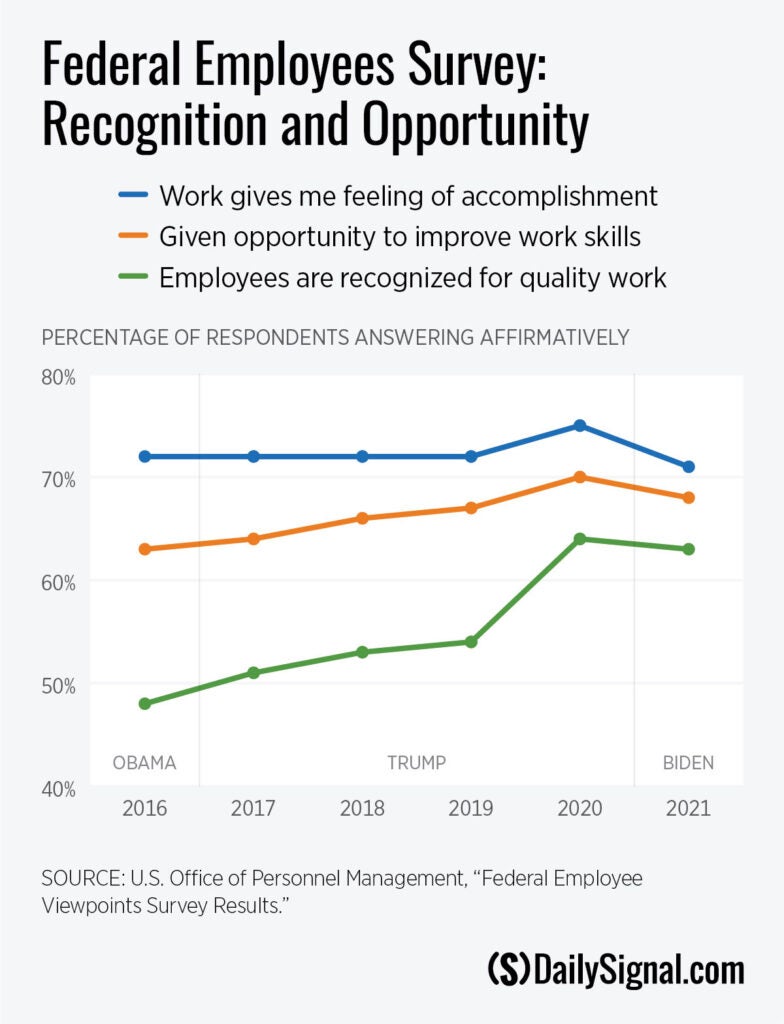
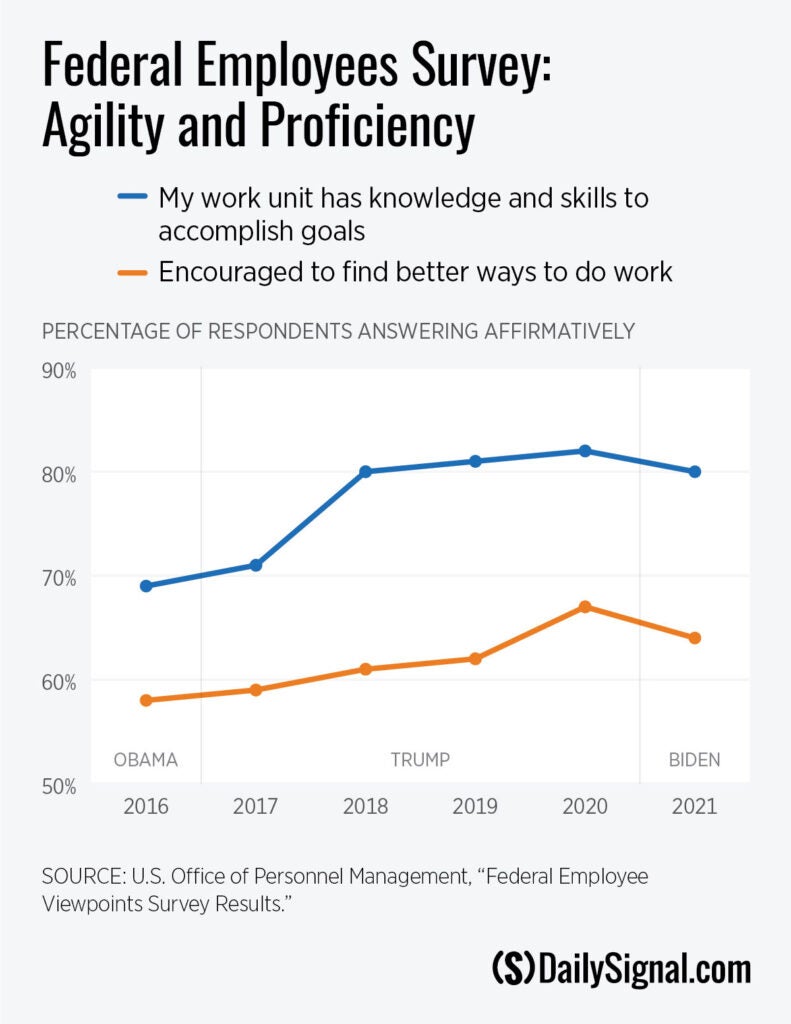
According to the Office of Management and Budget’s annual Federal Employee Viewpoints Survey, federal employees’ overall satisfaction surged under the administration of then-President Donald Trump, and has already tumbled under the administration of President Joe Biden.
Between 2016 and 2020, employees’ overall satisfaction rose by 8 percentage points. Over just the first year of the Biden administration, from 2020 to 2021, federal employee’ overall satisfaction plummeted 5.3 points.
This overall satisfaction score is an average of three questions posed to employees that asked them: “Considering everything, how satisfied are you … ” with your job, with your pay, and with your organization?
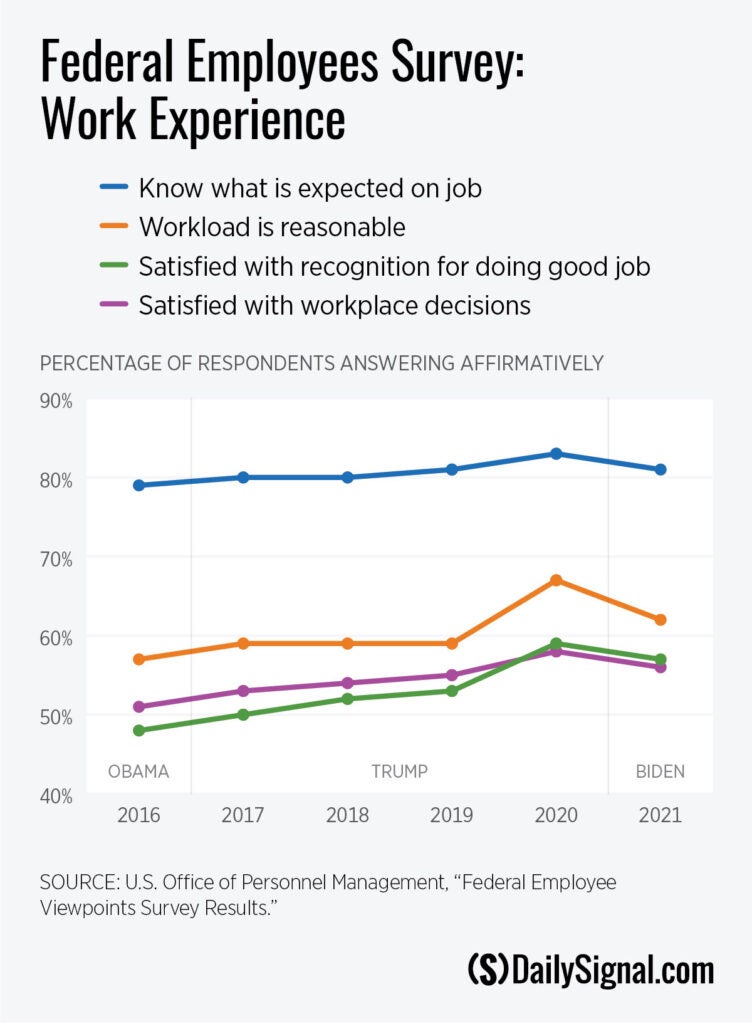
The areas where unions use to justify their existence have seen some of the greatest improvements under Trump. Here are some examples:
These survey results may seem unexpected and counterintuitive considering that the federal workforce is heavily Democratic. (The Hill reported that 95% of federal employees’ contributions to the presidential candidates in 2016 went to Hillary Clinton. (That’s based on Federal Election Commission records of contributions of $200 or more.)
But, the truth is that accountability as well as integrity are good for all workers regardless of political leanings.
The Trump administration’s federal workforce executive orders prioritized performance over tenure, provided flexibility for managers in disciplining and removing federal employees, established an interagency working group to improve labor relations, prohibited federal employee lobbying at taxpayers’ expense, and limited the amount of time that federal employees could spend working for their unions instead of doing the job they are paid to perform.
The American Federation of Government Employees’ fearmongering claims contended that those changes would deprive federal workers of their rights, silence federal employees’ voices, and “do nothing to help federal workers do their jobs better.” But the exact opposite has been true, as evidenced in the changes in federal employees’ assessments.
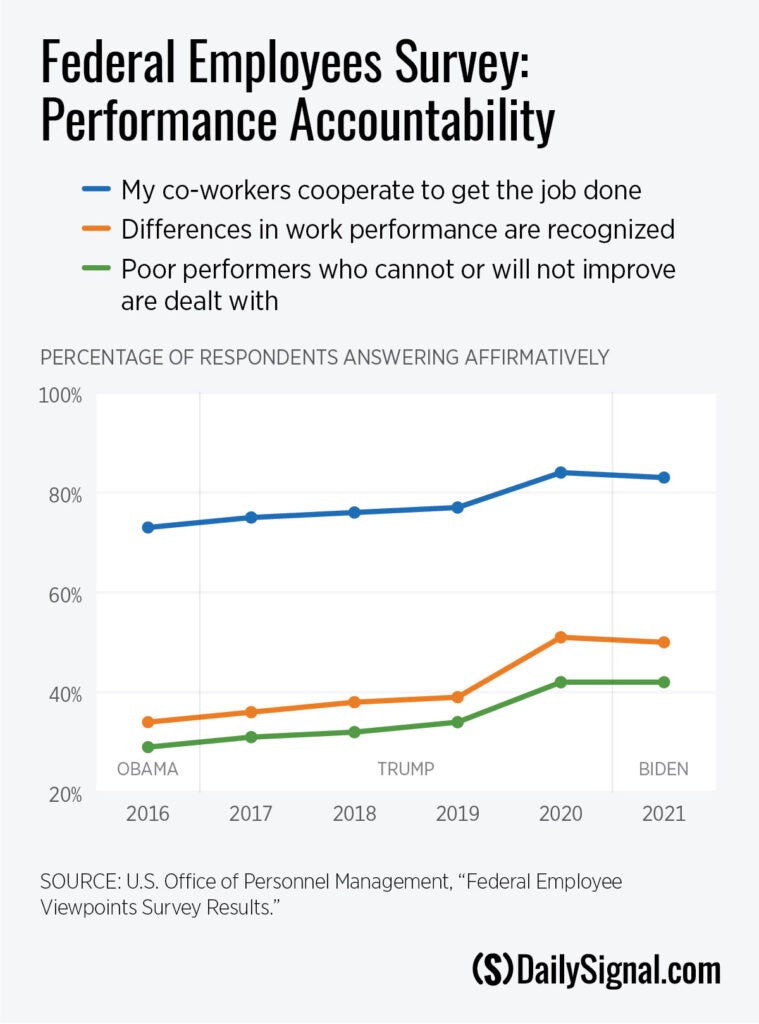
It is notable that federal employees consistently report the lowest satisfaction level with accountability for poor performers. Only 29% said that steps were taken to deal with poor performers who can’t or won’t improve in 2016. While this was a positive step in improving accountability, the current responses indicate that almost 60% of federal employees feel that there is little to no accountability for poor performers.
That’s almost certainly the consequence of an excessively burdensome and lengthy process required to dismiss a federal employee (or even to issue a “less-than-satisfactory performance” review). Instead of spending a year or more and countless hours attempting to impose accountability on poor performers, most federal managers simply give up, and taxpayers—along with that individual’s co-workers—have to bear the burden of their indolence.
This would not be tolerated by the private sector.
Rep. Chip Roy, R.Texas, introduced the legislation recently Public Service Reform ActIt is designed to improve accountability. The Public Service Reform Act, despite its important protections (e.g. whistleblower retaliation and discrimination), would make it easier for agencies and employees to address misconduct and eliminate those who are not performing well, so that agencies can better fulfill their missions.
Increased accountability creates an environment where employees feel valued, and can thrive.
This results in a better and more efficient government for all Americans.
Federal taxpayers and federal employees will both benefit from a federal government with greater efficiency and accountability.
Many of Trump’s executive orders were moving the federal government toward greater efficiency and accountability. By putting better policies into action, bills like the Public Service Reform Act would help to accelerate these gains.
But Biden’s undoing of Trump’s measures puts federal employee union elites above the workers they serve and the taxpayers who are forced to fund them. This is hurting federal employee morale—and costing taxpayers.
The Heritage Foundation’s Blueprint for Reorganization includes dozens of recommendations on how policymakers could reverse course and build upon the Trump administration’s start to a more efficient and effective federal government, including how it could create a better functioningMore competitive civil service.
Are you a fan of this article? To sound off, please email letters@DailySignal.com and we’ll consider publishing your edited remarks in our regular “We Hear You” feature. Be sure to include the article’s URL, headline, and your name.

