
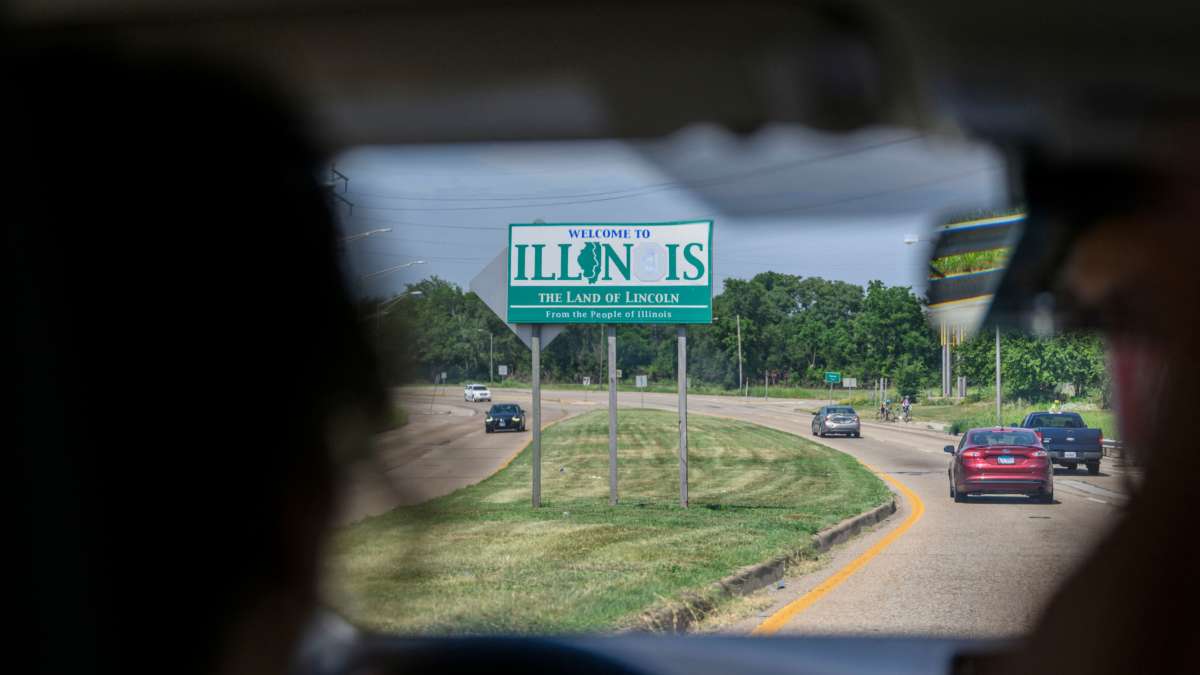

Following President Joe Biden’s Friday executive order protecting abortion rights, a Planned Parenthood of Montana spokesperson tells Truthout the organization will not reverse its decision to discontinue providing medication abortion to patients traveling from states where abortion has been banned after the Supreme Court’s reversal of Roe v. Wade.
The state’s five abortion clinics are operated by the organization. They previously raised legal concerns about patients possibly traveling with abortion pills from Planned Parenthood of Montana clinics to other states that have banned abortion and then taking the pills back home. However, the organization continues to offer such patients surgical abortion procedures (since it can guarantee that the procedure takes place in state).
The safe and effective two pill regimen may be administered in a clinic located in a state that has not prohibited abortions. For example, a patient could return to South Dakota where they would have to take one or both of the pills. Despite President Biden’s executive order, legal questions remain regarding whether physicians who prescribed the pills could be held liable.
“Although we are encouraged by President Biden’s executive action, our decision to provide abortion care must continue to take into consideration the rapidly changing landscape for abortion access across the country and amid the cruel efforts of anti-abortion politicians to ban abortion,” said Laura Terrill, vice president of external affairs at Planned Parenthood of Montana. “We look forward to seeing how the executive order is implemented, including with respect to improving public awareness, addressing misinformation, and protecting people’s privacy.”
Planned Parenthood of Montana’s decision to remain firm on declining many out-of-state patients the most common type of abortion method underscores the legal uncertainty that remains after President Biden’s executive actions on Friday, and that will have to be resolved in courts one way or another. Some providers and patients have been playing safe, trying to predict how far state prosecutors would go to criminalize the procedure.
Their caution isn’t necessarily unreasonable. South Dakotans who travel from South Dakota to Montana for abortion could be at risk. even if their abortion occurs within Montana’s borders, as Republican South Dakota Gov. Kristi L.Noem called a special session in order to discuss legislation that could limit out-of-state abortions for South Dakota residents.
Who are the legal experts? Truthout spoke say that while there’s plenty of legal precedent establishing the constitutional right to travel across states lines for medical procedures, and as President Biden’s executive order now establishes, abortion; the Supreme Court’s Dobbs v. Jackson Women’s Health Organization case has created legal gray areas in which lower courts could still create new precedent to prohibit people’s ability to travel for abortion. They’re also concerned that legislation like Texas’s Senate Bill 8, which contains an enforcement mechanism that allows individuals to sue anyone who has helped a person obtain an abortion, may significantly threaten abortion travel.
National anti-abortion organizations and Republican state legislators have already begun to advance plans to prevent people from seeking abortion elsewhere in states that ban it. Republican Texas State Representative Tom Oliverson told The Washington Post that his anti-abortion group, the National Association of Christian Lawmakers, has begun working with the authors of Texas’s SB 8 to explore model legislation utilizing the law’s novel private civil-enforcement mechanism to restrict people from crossing state lines for abortions.
A separate anti-abortion, right-wing legal group, The Thomas More Society, also hopes to utilize Texas’s SB 8 enforcement mechanism to draft model legislation for state lawmakers that would allow private citizens to sue anyone who helps a resident of a state that has banned abortion from terminating a pregnancy outside that state.
A July 7 letterThe 11 Texas Freedom Caucus conservative Texas state lawmakers also outlines plans to introduce legislation next legislative session that would use the private civil enforcement mechanism to pursue anyone who pays or reimburses for abortion-related costs, regardless of where it takes place.
Groups like the Association of Christian Lawmakers are even utilizing the language of “fugitive moms” and “human trafficking” to describe abortion seekers, providers who administer abortions to people who travel across state lines and/or the people who help them. “Many of us have supported legislation to stop human trafficking,” Association President and Arkansas State Sen. Jason Rapert told the Post. “So why is there a pass on people trafficking women in order to make money off of aborting their babies?”
This type of language provides important insights into how interstate travel for abortion will be framed in the future. It also reveals how abortion rights advocates can work inside and outside of the legal realm to counter them.
“Right now, legally, that [human trafficking terminology] doesn’t make any difference unless the courts start — which is I think the goal — to start viewing [cases] in that terminology, and it wouldn’t surprise me at all to see some right-wing judges start picking up on that terminology in their decisions,” says South Texas College of Law Professor Charles “Rocky” Rhodes.
Republican legislators are seeking ways to blur the lines of jurisdiction even within states like Texas. The July 7 Texas Freedom Caucus letter, lawmakers said they plan to introduce a bill allowing anti-abortion district attorneys to prosecute abortion-related cases outside their home jurisdiction when a local, progressive DA “fails or refuses to do so.” Now, Texas Freedom Caucus lawmakers and others also want to extend that logicTherefore, aggressive DAs may use prosecutorial discretion in order to read state legislation in a way that tries apply to people in other States, even if the draft legislation is not specifically targeted at travel.
Professor Rhodes tells Truthout he’s skeptical that courts would uphold a private civil-enforcement mechanism to prevent interstate travel for abortion since the question of the constitutional right itself is separate from its enforcement mechanism.
“If you have a constitutional right to go out of state and be able to have an abortion, the fact that the state enforces that through private mechanisms or through public mechanisms doesn’t matter,” Rhodes tells Truthout. “Either way, you still have the right, so you have to separate the substance of the right from the procedure about how rights are brought up in court.”
A law utilizing such a civil enforcement mechanism is more difficult to challenge in court overall because abortion rights groups don’t have a clear target to sue. Professor Rhodes explained that if an individual is granted a constitutional right, they can win the case regardless of whether or not they decide to sue.
Rhodes admits that SB 8-style private enforcement can have a chilling effect when the right at stake is not clear. Providers and others may be reluctant to take on the risks associated with fighting for their constitutional rights. The very possibility of a large civil fine or unresolved legal questions is often enough to chill legal challenges entirely, as seems to be the case with Planned Parenthood of Montana’s precautionary withholding of services.
Nevertheless, he concurs in the DobbsSupreme Court Justice Brett Kavanaugh rebuffed the idea that states could decide that their residents can’t travel out of state for an abortion, because of the constitutional right to interstate travel, writing that the issue isn’t even “especially difficult as a constitutional matter.” While this statement doesn’t carry any legal weight in terms of setting precedent, it could still inform decisions made by lower courts.
Justice Kavanaugh’s statement in his concurring opinion, however, appears limited to states trying to prevent their residents from traveling. It wouldn’t necessarily stop states from attempting to prosecute providers in others states, says University of Pittsburgh Assistant Professor Greer Donley, who specializes in medication abortion law and has closely studied theThere are proposals being made to ban abortion from certain states. Kavanaugh’s statement also fails to address the novel civil enforcement strategy out of Texas that is gaining traction in Republican legislatures, Donley points out.
Donley also notes that Justice Kavanaugh said during his confirmation hearing that Roewas settled law, and then sided in favor of the conservative majority DobbsIt will be overturned. “If there’s a real case involving real facts, [Kavanaugh] might end up coming out differently and saying, ‘Yes, generally there’s a right to travel in the Constitution, but given the facts here, it does not apply,’” Donley says.
She states that extra-territorial state laws can be applied to any issue. The questions courts will consider depend on the actions of states that have prohibited abortion and the strength of the laws in those states that allow abortion.
“A lot of the doctrines that both sides are going to rely on are unknown. They just don’t have a lot of precedent in this context at all, so we really have a lot of uncertainty. Truly, it’s a profound amount of uncertainty,” Donley tells Truthout. “We’re going to have to see what the courts do, and the courts are going to almost certainly disagree. Then, how? [the courts] handle those disagreements is just another level of uncertainty.”
Much will depend on whether abortion-rights state have adequately protected themselves against prosecutions from other states. Only Connecticut, New York City, Delaware, and New Jersey have passed laws specifically protecting providers from being charged under other states’ abortion restrictions. Meanwhile, governors in Massachusetts, Minnesota, New Mexico and Nevada have issued executive orders saying they will not extradite providers to states that have banned abortion, and that state employees won’t comply with out-of-state investigations.
Donley described Connecticut’s shield law as the nation’s strongest protections, upon which other abortion-rights states could model their legislation. This law provides broad protections against anti-abortion laws which attempt to extend across state lines. These measures protect individuals from subpoenas and summonses from other states in cases involving legal abortions within Connecticut. The law also prevents Connecticut authorities from adhering to another state’s request to investigate or punish anyone involved in facilitating a legal in-state abortion.
At the federal level, President Biden’s Friday executive orderOfficially issues instructions to the Departments of Justice and Health and Human Services in order to combat state-level efforts by pregnant people to travel across state lines for abortions services and to protect access federally approved pills.
With the new executive order in place, providers like Planned Parenthood in states like Montana can be assured of at least some level of protection, since the order instructs medical providers that they are not required to disclose patients’ private health information to law enforcement.
Biden’s Justice Department has already warned states restricting abortion that it will fight legal attempts to prohibit interstate travel or prosecute providers in abortion-rights states, saying that such attempts violate the constitutional right to interstate travel and commerce.
Still, President Biden’s ability to protect abortion rights by executive action is limited without congressional action codifying abortion rights at the federal level. Biden’s executive order is expected to push HHS and the Justice Department to fight in court to protect abortion providers and seekers, but the order cannot guarantee courts will take their side against aggressive prosecution by states that have banned abortion. People who order abortion pills via mail from other states are not protected by the executive order. This could still be criminalized.
Legal experts also point out that the Justice Department’s strategy of opposing Texas’s SB 8 six-week abortion ban ultimately failed, and that new state laws involving interstate travel could raise additional legal questions.
Donley tells TruthoutThe federal government has enormous power to regulate interstate commerce. However, President Biden could do more on the executive level to regulate these issues, including declaring an emergency for abortion access. “Certainly, if the federal government passed a statute that codified a right to travel, that would be a very, very, very helpful and preemptive thing for it to do,” she says.
Professor Donley also stated that laws prohibiting residents from traveling over state lines for abortion and cross-state prosecutions against providers will likely have legal implications beyond abortion.
“Many of the proposals we’ve been hearing about for trying to chill interstate travel are using an SB 8-style mechanism to provide further removal from constitutional protections,” Donley says. “So, to the extent that states are allowed to prohibit travel or prosecute people in other states, the question does become: What other ways can states use those same mechanisms for other types of things?”

