

The world was still young and new. As details were being worked out for the Build back Better Act (BBB), the pundits enjoyed comparing President Joe Biden and Franklin Delano Roosevelt. It would be transformative, they cried, a New Deal for the realities of the 21st century… and then the political corner of that reality — in the form of corporate conservative Democratic Senators Joe Manchin and Kyrsten Sinema, along with a clot of equally conservative House Democrats — intervened.
Biden became the incredible shrinking president as the BBB Act turned into a punctured balloon at the Macy’s Thanksgiving Day Parade. Suddenly able to get very little done and with approval numbers crashing down around him, because “controlling both the House and Senate” did not actually mean controlling the House and Senate, the pundit groan of Biden’s doom grew louder by the day. If he was lucky, so they said, he’d maybe rate a Jimmy Carter comparison: to that stymied presidency, that is, and not to Carter’s Yoda-like post presidency.
And then of all people on this green and bloody Earth, Chuck Schumer pulled a nifty “Look at my thumb!” trick on the Senate’s bleak wizard, Mitch McConnell, and all of a sudden there was a deal on the table with Joe Manchin’s name signed at the top. A sweaty week of waiting for Sinema — will she insist on an amendment requiring gerbils to pay a lower corporate tax rate before blowing up the process? — came and went. She did. chop out more money for private equity piratesYesterday’s Senate vote passed the bill with the tie-breaking vote by Vice President Kamala Harris.
Farewell, build back a better act. Hello, Inflation Reduction Act. FDR comparisons are out, Carter doesn’t fit anymore, so the pundits needed a new presidential contrast. As ever, one was handy.
The passage of the Inflation Reduction Act would make Biden one the most successful presidents in modern history. We once noted that the mismatch between the size of Biden’s ambitions and his margins in Congress made it seem like he was trying to pass a Rhinoceros through a garden hose. It ended up being more like a pony, but it’s still pretty impressive.
To wit: American Recovery Act: $1.9 trillion; Infrastructure Investment and Jobs Act: $550 billion; Chips and Science Act: $280 billion; Inflation Reduction Act: ≈$700 billion
That’s a nearly $3.5 trillion agenda. The range of issues covered is impressive: the pandemic and the economic fallout, roads, bridges. broadband, rail. manufacturing, science, medicine prices, prescription drug prices. Health insurance, climate change. Deficit reduction and tax equity. He also passed NATO expansion, a new gun safety bill, and a bill to address toxic burn pits exposure for vets. Five out of seven of these laws — all but the two biggies, the ARP and IRA — received significant Republican support.
There’s not much debate anymore over whether Biden has been a consequential president. His first two years as president may be compared with LBJ in terms of moving his agenda through Congress.
Ah yes, Johnson… who, like Biden, had flaws as broad as the Mekong Delta. There absolutely could be worse comparisons; Robert Caro didn’t write a massive, timeless, three-part biography of Johnson and his legislative skill, culminating with the book Master of the Senate, if Johnson didn’t knock some bodies down under the Dome. Biden is a purring kitten compared to Johnson, but still, this not-insignificant thing got done, “half a loaf but fairly delicious,” in the wordsThis is Esquire blogger Charles P. Pierce. Mitch McConnell still hasn’t decided whether to wind his or scratch his wrist. That’s worth the price of admission right there. The bill now moves to the House, where conservative Democrats lurking behind make noises like they might just go along with the show.
“Democrats voted along party lines to pass the first comprehensive climate law in American history,” reports Robinson Meyer for The Atlantic. “The bill will touch every sector of the economy, subsidizing massive new investments in renewable and geothermal energy, as well as nuclear power and carbon capture and removal, and encouraging new clean-energy manufacturing industries to develop in the United States. It is the Senate’s first economy-wide bill to reduce emissions. At more than $369 billion, its investment in climate change is the largest in the country’s history.”
It is difficult, but so very difficult, to look at the Inflation Reduction Act without seeing a thousand missed opportunities in a moment when there is a crisis. This and the BBB Act are like a diamond and dime. Both have worth. However, you can only alter the future if one is placed on your right finger. You cannot even make a phone conversation with the other. Even the lumpy name has “Manchin” written all over it, from back when the coal baron senator blew up the BBB for the eleventh time, because of inflation that time, until whatever his Magic Republican 8-Ball told him to say the next time.
Nearly every corner of this bill is either a giveaway for fossil fuel interests or money power. It also contains provisions that push elements years down the road, open new areas for drilling and/or leave unresolved immediate concerns that were at the core the original bill. It is historicThey say that history is all about the past. This is what happens when the United States Senate gets in the way of good.
“There are some people who think this bill is worth supporting,” Sen. Bernie Sanders saidThis week, from the Senate floor. “There are others who think that it is not. But, whatever your views on this bill may be, let’s be clear: As currently written, this is an extremely modest bill that does virtually nothing to address the enormous crises facing the working families of our country. It falls far short of what the American people want, what they need, and what they are begging us to do.”
Sanders released a statement following the passage of the bill by the Senate. read, “This reconciliation bill goes nowhere near far enough in addressing the problems facing struggling working families. But it is a step forward and I was happy to support it.”
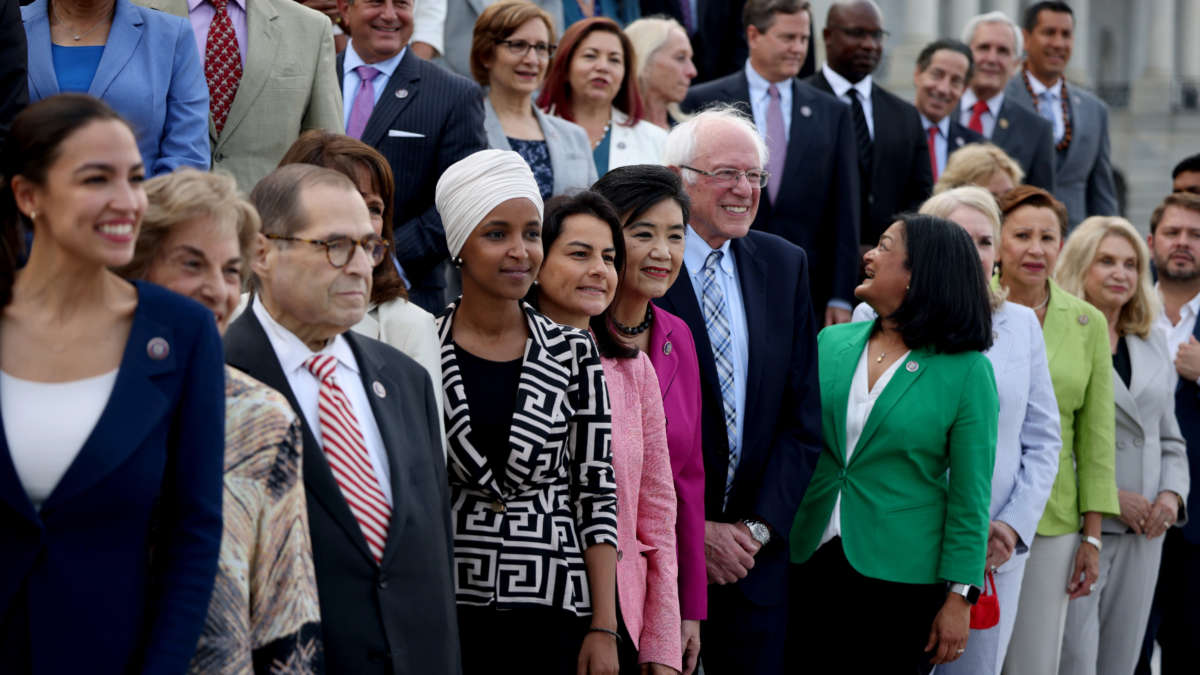
Despite being inadequate, this bill, with its drained freight of good policy, would not have been possible without Bernie Sanders and his Congressional Progressive Caucus. The long-running Manchin/Sinema wars fought by that caucus saw the infrastructure bill passed. Their efforts have kept the BBB Act in place, a fate many longed for for for many long months. Their labors would have been a tragedy if they were to end here with this bill.
However, I believe it could be a real, no-bullshit start, finally. The Progressive Caucus in the House is as strong as it has been in my memory, with Sanders’s clarion voice still ringing the walls in the Senate. A great vat of news media people who get paid a king’s ransom for being wrong all the time seem to think a Republican takeover of Congress in November is a foregone conclusion. I am not willing to concede that this outcome is certain. Consider:
- Biden suddenly has a lot of legislative achievements to draw on;
- A number of candidates reflect the Republican Party’s position on the Senate side have been fielded by Republicans, especially those who are on the Senate side. the far right Trumpian wingparty, making them extremely vulnerable in general elections.
- The astonishing outcome of the Kansas abortion vote not only proves the energizing quality of the issue for Democrats, but that the GOP’s horrific assault on choice across the country runs against the beliefs of a huge majority. If 60 percent in one of the reddest states of the country thinks the GOP is wrong, RoeThe GOP has a major problem.
- “The consumer outlook for inflation decreased significantly in July amid a sharp drop in gas prices and a growing belief that the rapid surges in food and housing also would ebb in the future,” reports CNBC today. The Republicans who believe inflation will help them in November might not have that issue on their side, at least not in the minds the voters.
- Donald Trump is still out there, lurking like a dyspeptic shark, trembling at the possibility of a pre-midterm Presidential announcement that would immediately make the midterms all about Trump. Few Republicans are able to look at this development without deep existential fear.
There are still less than 100 days (or 92, to be exact) before the November midterms. All who have said “things can change” should pat yourselves on the back; things have already changed, and will change again. And again. It is possible that the Inflation Reduction Act could be a promising first instead of a heartbreaking final.

