
The Supreme Court has concluded one of the most significant and consequential terms of its history. It leaves behind consequences and implications for the direction and future of our country.
A move of Hispanic and Black voters to the left could be a significant result.
It is reasonable to conclude conservatives are content with the direction this court has taken them, while liberals are not.
More specifically, those who believe that the original vision of the country is about individual liberty, and that the Constitution is intended to limit the federal government’s power to a limited number of areas are happy.
Those who believe that the vision of founders is irrelevant today, or that the country is flawed from the beginning, and their job is to correct those flaws, will not be happy.
Many might conclude that the recent court session will only deepen the divide between those on the right or those on the left.
However, this court’s decisions have a direct and positive impact on black and Hispanic realities. It is reasonable to conclude that the political outcome will be migration of Hispanic voters towards the right.
Propagandists on their left will tell blacks and Hispanics to expect the opposite.
The Dobbs decision that overturned Roe V. Wade has been the focus of most headlines.
There were also other crucial decisions that had far-reaching consequences.
In the case of Carson v. Makin, the court found that the state of Maine was in violation of First Amendment protection of “free exercise” of religion where state funds used to pay tuition for public and private schools could not be used for religious schools.
Kennedy v. Bremerton was a case in which the court ruled Bremerton School District had violated the First Amendment’s free exercise of religion protections. Bremerton High School’s football coach was fired for praying at the 50-yard mark at the end of football games.
In New York State Rifle and Pistol Association v. Bruen, the court found a New York State law requiring “proper cause,” that is, a special reason to carry a handgun, in violation of the Second Amendment guarantee of the right to bear arms.
As Justice Brett Kavanaugh asked in the hearing of the case, “Why isn’t it good enough to say I live in a violent area and I want to defend myself.”
For black Americans, who live in some of the most dangerous communities in the nation, the court’s decision guaranteeing them the right to defend themselves is important and good news.
For black and Hispanic Americans, whose children are disproportionately trapped in failing public schools, the court’s clarifying protections and guarantees that strengthen the ability for parents to choose where to send the children to school is very good news.
The court’s decisions firming up religious freedom protections of the First Amendment and disabusing the faulty notion that the U.S. Constitution is indifferent to sanctity of life and provides for abortion rights will move blacks and Hispanics to the political right.
Hispanic and black voters are beginning to realize the damage that the cultural chaos of leftism has done to their communities and families.
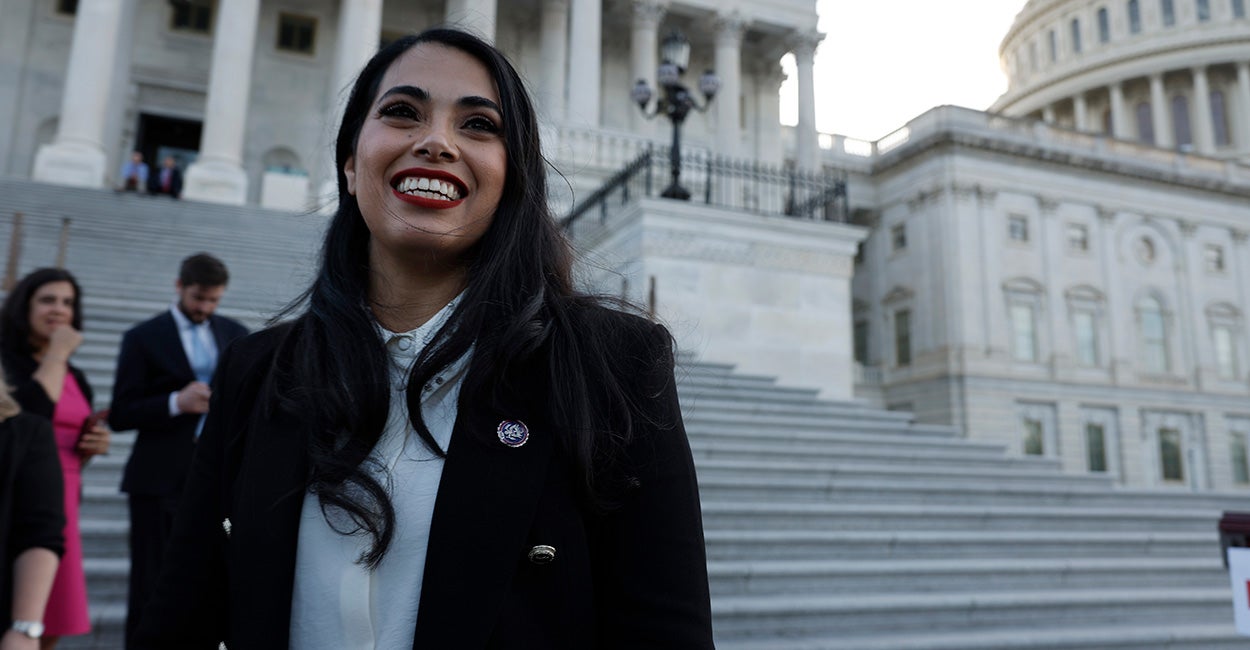
Mayra Fernandez, a Republican, was elected the first Mexican-born member in Congress. In a Texas district that had never seen a Republican before, she received 51% of the vote. She ran as a candidate raised with “strong conservative values that focused on faith, family and hard work.”
Her campaign poster branded “God, Family, Country” in both English and Spanish.
I truly believe the recent Supreme Court session will sit well in America’s black and Hispanic communities and gives good reason to expect strong implications for change in the nation’s political landscape.
COPYRIGHT 2022 CREATORS.COM
The Daily Signal is open to all perspectives. Nothing here should be taken to mean that The Heritage Foundation views are represented.
Do you have a comment about this article? To sound off, please email letters@DailySignal.com and we’ll consider publishing your edited remarks in our regular “We Hear You” feature. Be sure to include the article’s URL, headline, and your name.

