
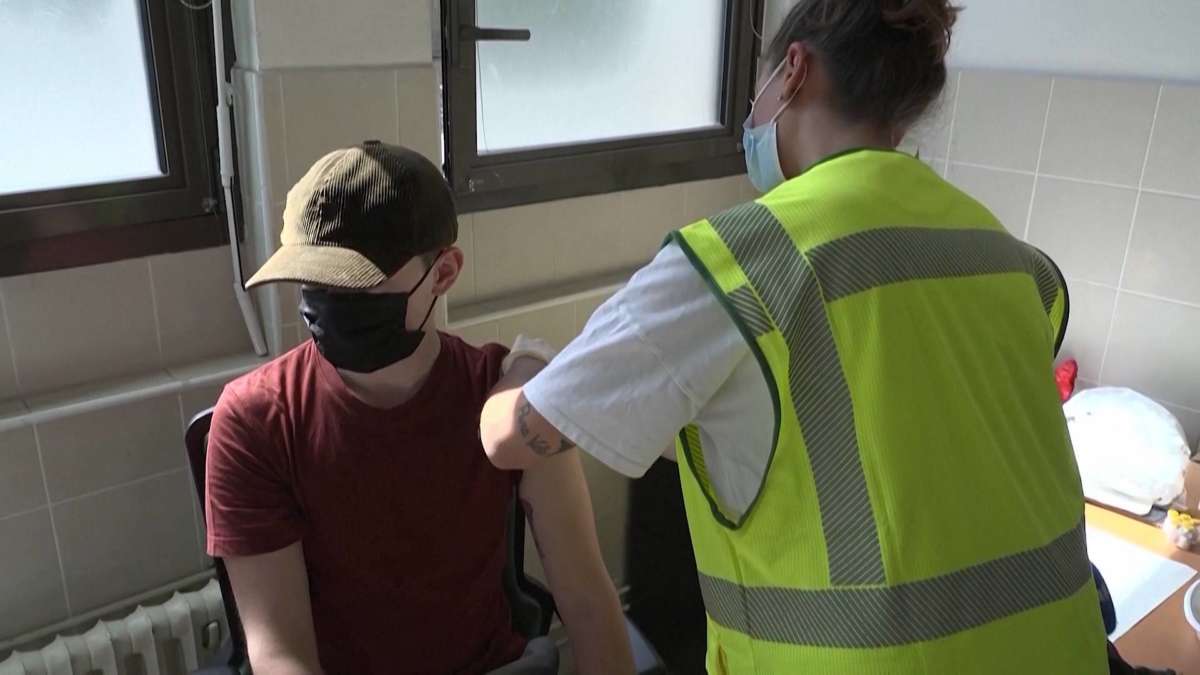
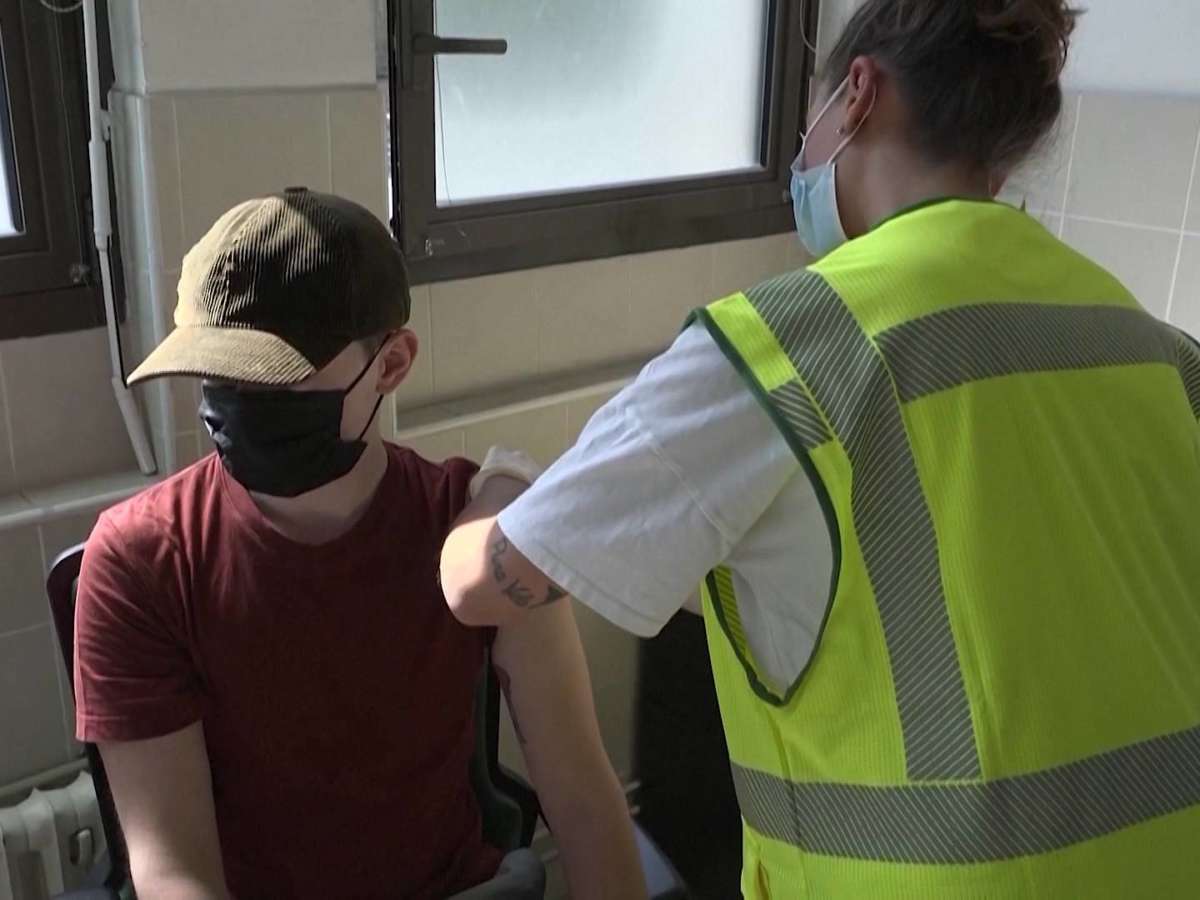
Chicago’s first monkeypox case behind bars was reported this week. Health experts warn that jails may be more vulnerable to the spread of the virus, which spreads through close contact. We speak with Dr. Homer Venters, the former chief medical officer for New York City’s Correctional Health Services, whose new op-ed for The Hill is headlined “CDC must act to prevent monkeypox explosion in prisons.”
TRANSCRIPT
This is a rush transcript. Copy may not be final.
AMY GOODMAN:We move from heat waves, to the issue monkeypox and yes, to the spread monkeypox behind bars. On Thursday, New York’s health commissioner declared monkeypox an imminent threat to public health amidst rising concern about increasing cases in the state and elsewhere. Monkeypox is transmitted through close physical contact. Experts say it can also be spread within households through dancing, cuddling, sharing contaminated clothing or bedding, and even by breathing in the virus. Symptoms include swollen lymph nodes, fever and muscle aches, and a bumpy rash with lesions that can last two to four weeks — painful, painful lesions.
This is the first instance of monkeypox reported behind bars in Chicago, Illinois this week at the Cook County Jail.
We’re going to continue now with Dr. Homer Venters, a physician and former chief medical officer for New York City’s Correctional Health Services. He has just published a new article. op-edFor The Hill that’s headlined ”CDC must act to prevent monkeypox explosion in prisons.”
Dr. Venters, I last spoke with you about the COVID-19 pandemic in prisons. Let’s now talk about monkeypox. While you formerly were head of health services at New York City’s Correctional Health Services, we are now talking to you in Virginia, where you’re investigating prisons and dealing with monkeypox.
DR. HOMER VENTERS: Yeah. I should say, where I am now, there aren’t any cases. My concern is that there are so many places in the country, including the intake pens and the court pens that people are doubled up or tripled up in cells. There is a forced, forced contact between humans that involves skin to skin contact. CDC recommendations that deal with raves and parties and social gatherings, if you had one iota of experience or even talked to a single incarcerated person, you would realize that same contact is happening thousands — tens of thousands of times every day in jails and prisons. I am worried that — you know, right now we have about 5,000 cases reported in this country — that that number could dramatically increase, and the whole epidemiology of the American outbreak could shift in a direction that involves many more cases among people who have justice involvement.
AMY GOODMAN: So, let’s talk about the monkeypox vaccine, TPOXX. I mean, the U.S. had the foresight to store millions — right? — of these TPOXX vaccines, which dealt with — and you can explain all of this — smallpox. What happened? Why are people lined up — this is outside of prisons — trying to get this vaccine and can’t get it now, not to mention what’s happening in prisons?
DR. HOMER VENTERS: Well, I think that, you know, even what you could see in New York City, my concern is that we’re going to go down the same path of a real lack of equity in who gets access to these vaccines. Inside prisons and jails and detention centers, one of my concerns is that there won’t be adequate contact tracing to determine who, just in the post-exposure scenario, should be offered the vaccine. There will be issues trying to get vaccine for carceral settings. These are always at bottom of the list. This one technical tool of contact traceing was all I needed. I found about 40 to 50 COVID inspections, often jails and prisons just don’t do it. They just don’t try and figure out who were the close contacts for these cases.
Monkeypox is a disease that causes fewer cases than other diseases. So we probably won’t have 70, 80% of everybody in a prison getting it. We might have a smaller population. It still takes a strong will to find out who was in that court pen or intake pen or housing area. And that’s where I have a lot of concern about just identifying who could, in a post-exposure scenario, be eligible. There are also people who are extremely vulnerable that we know of today and should be eligible in a pre-exposure or preventive format.
AMY GOODMAN:There are around 21,000 monkeypox cases across the globe. Like COVIDThe U.S. holds, what, 25% of those cases, 5,000 cases. Then there is the prison population. A large proportion of cases of monkeypox in America is found in Black Americans and Latinx. The Black and Latinx populations are overwhelmingly, disproportionately, represented in prisons. What does this mean in prison?
DR. HOMER VENTERS: Well, this means that mass incarceration is one of the ways — obviously not the only way, but one of the ways — in which we have a system that produces inequity in all levels of health outcomes. And here, we’re talking about infections. You know what? CDCThe state departments of Health have been absent from monitoring the health of those behind bars and promoting better healthcare for them.
This is largely due to a reluctance of measuring the risk of incarceration. Keri was only talking about it. Incarceration can pose a health risk to both the individual and the families living in the areas where they are held. And so, here, it’s infections. However, sexual abuse could be treated in the same way. This could also be true for traumatic brain injuries, which are sustained behind bars. They return home with new traumatic brain injury. But you don’t see the CDCThis health problem can be assessed and treated in the same manner as they do with youth sports or other health problems.
So, I fear we’re down the same path. We might get some short-term, fleeting involvement from them CDCState DOHs in these settings have the highest response to monkeypox, but no intervention to say, ‘You know, these areas create health risks. We must fundamentally change how we think about health and measure the health risks in these settings.
AMY GOODMAN: So, TPOXXThe smallpox vaccine, which can also be used to treat monkeypox, is very effective. The problem is getting it. Who are the lobbyists to get it into the prisons, considering there’s such an overwhelmingly — there’s such a shortage of it in the United States overall? And then, what — just tick off what are the most important actions the CDCThis country should take steps to ensure the health and well-being of the prison population.
DR. HOMER VENTERS: Sure. So, we do have — because about a year and a half or two years ago we went through this same set of discussions around the COVIDWe do have advocates, legal assistance organizations, and some parts of this country’s public health system that are ready to help prisoners get vaccines. And so, there, I think, the pump was primed — even though we didn’t get great outcomes always — with the need to go to governor’s offices, to go to state departments of health and force these questions about access. So I think we’re actually in a better spot than we would have been without COVID.
I believe that the CDC today needs to come up with — and I know they’re working on it — guidelines for detention settings specific to them. They must be more specific. So, these intake pens, where you cram people together, where you’re going to have transmission, they need to say explicitly, “You shouldn’t do this.” You shouldn’t be putting 40 people into a small pen, having them sleep on the floor. They should also make it clear what they are not comfortable talking about, such as copays. People who have symptoms don’t report them either because they have to pay money when they report these symptoms, especially in prisons, or they may go to a punitive setting. They could be placed in solitary confinement. They may be placed in solitary confinement. CDCYou can be more specific.
However, in order to do this, the guidelines need to be more grounded in the actual experiences of incarcerated individuals. They need to speak to incarcerated persons. They are treated the same way as a state when they go on a tour. DOH, they can’t walk in and take a manicured tour from jail administrators. They need to meet with others who have been through this experience and have confidential discussions.
AMY GOODMAN:How many prisons and jails are there in this country?
DR. HOMER VENTERS:There are approximately 3,000 prisons, 2,000 prisons and 2,000 juvenile detention and immigrant centers. That’s about 7,000 boxes. So, if you think we have 5,000 cases in this country today, that number can dramatically increase, and —
AMY GOODMAN:We must leave it at that. I also want to thank Dr. Homer Venters for being there.
DR. HOMER VENTERS: Thanks, Amy.
AMY GOODMAN: The former chief medical officer for New York City’s Correctional Health Services. I’m Amy Goodman. We appreciate you joining us.

