
One of the more popular complaints of the contemporary left is that the Constitution subverts “democracy” for “minority rule.”
The United States is now more divided than ever. We have less reason not to use the institutions and mechanisms that diffuse power and limit one side from dominating the other. Institutions such as the Senate and the Electoral College temper divisions.
Yet, the anti-constitutionalists’ argument usually has two strands that (illogically) intersect. The first is to argue that the Constitution is a work that slave-owning white men used antiquated and counterproductive thoughts that undermine modernity. The second is to argue that, in reality, we have no idea what founders intended.
When conservative-turned-progressive Max Boot says that “American democracy is broken,” his plan to fix it is to effectively dispense with states. “The Founders,” Boot argued in The Washington Post, “never envisioned such an imbalance between power and population. It undermines any pretense that we are still a democracy.”
Boot’s contention only makes sense if a person is ignorant of the founding bargain between the states. The first American census of 1790 revealed that Virginia, at the time the most populous, had about 20% of the population. Today, California, our largest state, makes up around 12% of the nation’s population. No one complained about the disparity of the Senate in 1790—or, as far as I know, 1890 or 1990, for that matter—because the “imbalance” was literally codified in the founding document (which, incidentally, mentions “democracy” zero times). Boot is willing to destroy the system because he can’t coerce smaller states to live under the decrees of leftism.
Also, we know that the framers “envisioned” small states having an equal say because, in Federalist 62, James Madison grapples with the undemocratic nature of the Senate but comes to the conclusion that it is an “advantage” that “No law or resolution can now be passed without the concurrence, first, of a majority of the people, and then, of a majority of the States” (emphasis mine). The Senate functions exactly as it was intended.
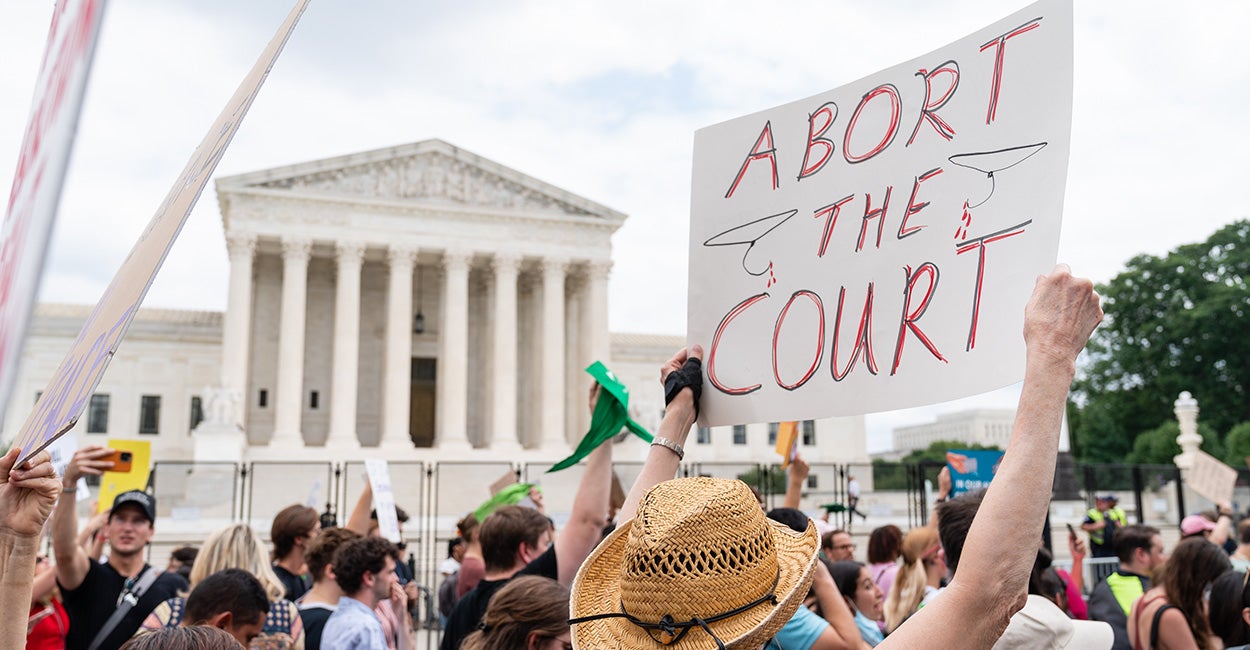
Boot also claims that conservatives see the founders “as demigods.” The Supreme Court, he writes, “has just upheld abortion restrictions and struck down gun restrictions based on the dubious claim to be channeling the Constitution’s drafters.”
The Court didn’t “uphold abortion restrictions” or “strike down gun restrictions;” it adjudicated the constitutionality of laws. In Dobbs v. Jackson Women’s Health Organization, the Court, after 50 years of judicial decree, handed the abortion issue back to voters. And in New York, the Court found that “bearing” arms outside the home was a constitutional right—no court, incidentally, has ever found otherwise—and thus, bureaucrats are no longer allowed to arbitrarily stop citizens from practicing a right.
You might believe the Constitution has it wrong, but there’s nothing remotely “dubious” about justices ruling that the Constitution doesn’t concern itself with the issue of abortion, even tangentially, but clearly states that we have a right to “bear arms.”
There is no confusion as to what the founders had a say about the Senate and Electoral College. Now, though I don’t consider anyone a demigod, I most definitely consider Madison and Alexander Hamilton’s views on stable governance more meaningful and enduring than the impulses of shapeshifting pundits who would rather be “ruled by Stalin” than a constitutionally constrained, duly elected president. I’m a patriot like that.
The chances of amending Constitution to create a proportional Senate and get rid of the Electoral College is very slim. The normalization of these ideas—furthered by people unable to deal with the existence of a multiparty state—does delegitimize institutions and corrodes the rule of law. It’s working, because leftists seem to be increasingly convinced that obtaining a majority in the imaginary race for the popular vote (which no candidate has ever won because none has ever run for the title) gives them license to ignore process and rights.
The diffusing of the federal government’s power over states and the state’s power over individuals isn’t “minority rule.” It’s one of the most indispensable ways to ensure that a diverse people can rule themselves. It is not a serious threat to American democracy that New Yorkers are unable to dictate Oklahoma’s abortion laws. Nor that Texans can’t compel Rhode Islanders to adopt their gun laws. It’s the point.
COPYRIGHT 2022. CREATORS.COM
The Daily Signal offers a variety perspectives. This article is not meant to represent the views of The Heritage Foundation.
You have an opinion on this article? Send an email to let us know your opinion. letters@DailySignal.com and we’ll consider publishing your edited remarks in our regular “We Hear You” feature. Include the article’s URL or headline, as well as your name and hometown.

