
Key Takeaways
- Check wheel chair weight before anything else. A lightweight or folding wheelchair that saves even 10 to 15 pounds can make car loading, storage, and caregiver lifting far safer by the second week of use.
- Measure seat width, seat depth, and cushion support instead of trusting a quick showroom sit. A wheel chair that feels fine for 20 minutes can cause posture problems, transfer trouble, and pain on longer outings.
- Match the chair type to stamina, not pride. Manual, transport, and electric wheelchairs each fit a different level of strength, and picking the wrong one usually means more pushing, more fatigue, and less use.
- Treat brakes, footrests, and armrests as safety equipment. Push-to-lock brakes, swing-away footrests, and the right armrest style can prevent bad transfers and near-falls after surgery or mobility decline.
- Test the wheel chair against real-life surfaces and tight spaces. Small front wheel casters, limited turning room, and poor performance on uneven pavement are the problems families usually discover after they’ve already bought it.
- Compare Medicare coverage, free wheelchair programs, and used wheelchair risks before choosing the cheapest option. A low-cost or used model with the wrong fit, worn brakes, or weak battery can end up costing more than a better portable or power chair.
Week one lies. A wheel chair can seem fine on delivery day—light enough in the showroom, comfortable for a short sit, easy enough to fold once—and then start causing real trouble by the second week, right when a parent has a follow-up visit, a longer outing, or one bad transfer in the driveway. In practice, that’s when families notice the hard stuff: the chair doesn’t fit the trunk, the footrests bump the shins, the seat feels tolerable for 20 minutes — awful at 90, and the caregiver is the one doing all the lifting.
For adults trying to help an aging parent after a fall, joint replacement, or steady walking decline, the buying pressure is intense. Fast decisions get made. Usually after discharge. Usually with incomplete information. And here’s what most people miss: the real test isn’t whether a wheelchair looks compact or has decent reviews. It’s whether the person can sit safely, transfer without a near-fall, and get through a normal week without pain, fatigue, or caregiver strain. Small details decide that outcome—brake access, seat depth, turning space, wheel size, battery setup, even whether the armrest gets in the way at the exact wrong moment.
Families don’t regret buying mobility equipment.
They regret buying the wrong type too quickly. That’s a different problem, and it shows up fast (often within days), especially once errands, medical visits, thresholds, ramps, and car loading enter the picture.
Why the right wheel chair choice gets urgent after a fall, surgery, or sudden mobility decline
Think of this like a coffee-table reality check: the first wheel chair choice often gets made fast, under stress, and with the wrong person testing the details. After a fall or hospital discharge, families usually focus on getting any chair into the house. Fair enough. But the wrong fit starts creating problems within days.
The first week masks problems that show up in real use
A chair can seem fine in the hospital hallway — still fail at home—at the car trunk, bathroom doorway, or front steps. A folding wheel chair may close easily, yet still be too bulky for daily transport. A lightweight wheel chair often cuts caregiver strain fast; dropping from 35-45 pounds to the low-20s changes lifting, storage, and follow-up visits. And a portable wheel chair matters most once appointments, pharmacy runs, and family outings start stacking up.
Why caregivers usually become the real decision-makers
By week two, the caregiver is usually loading it, steering it, and dealing with footrests, brakes, and tight turns. That’s why families shopping for a wheel chair for adults should check three things first:
- Total lift weight, not marketing language
- Seat width and depth for safe posture
- Folded size for the actual vehicle
In practice, a manual chair that looks standard can still be the wrong call if the user lacks arm strength or the caregiver has back pain (a common week-two surprise). Even clinicians who review medical wheel chair online listings see this pattern again — again.
The wheel chair weight problem: what families notice the second they lift it into the car
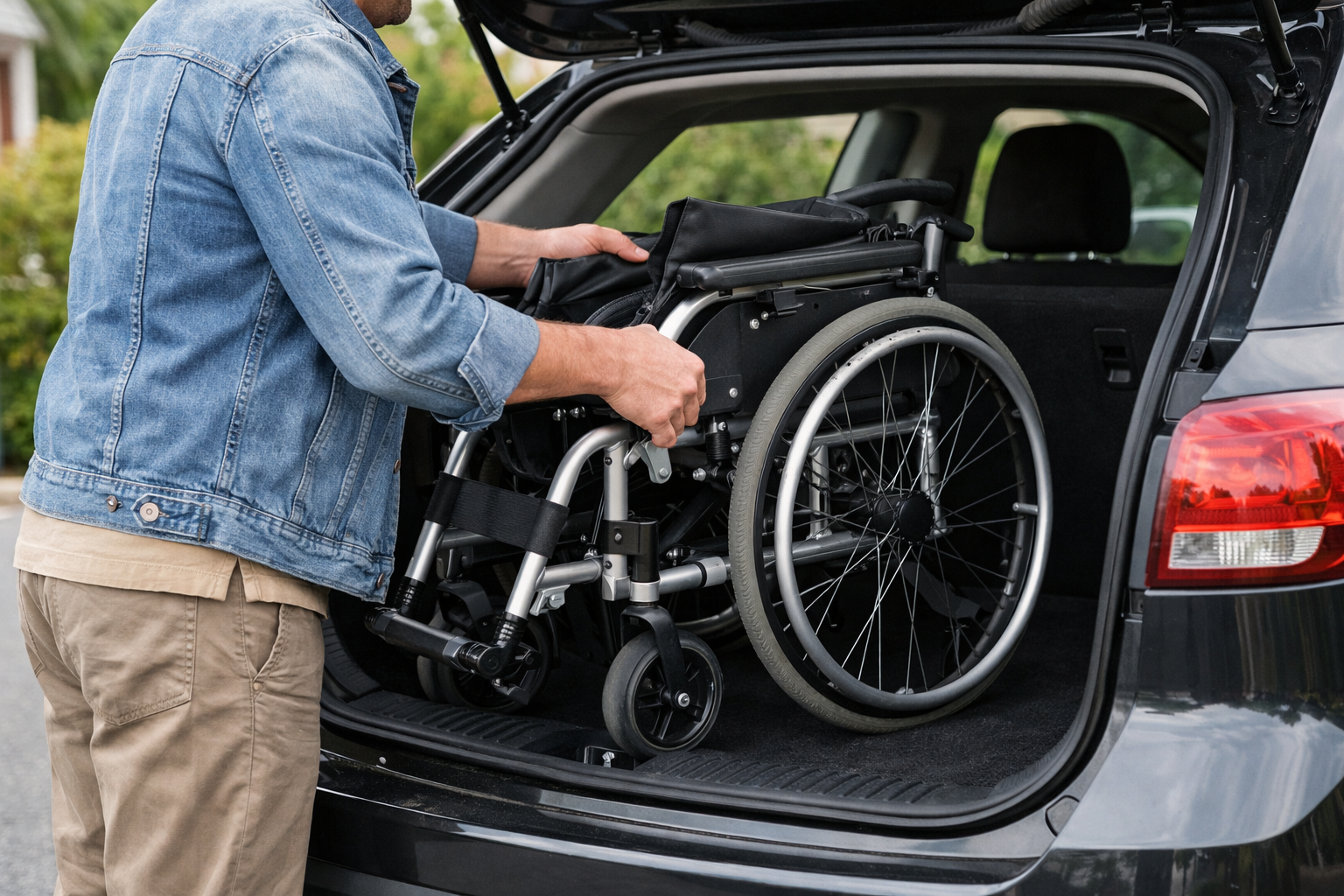
Why does the wheel chair suddenly feel twice as heavy in a parking lot? Because on paper, 35 to 45 pounds sounds manageable; in practice, that load has to clear a trunk lip, avoid twisting, and get lifted again three hours later. That’s when families realize a true folding wheel chair can matter more than color, cup holders, or price.
Lightweight vs standard wheelchair frames in plain numbers
A lightweight wheel chair often lands in the 13 to 25 pound range, while a standard manual wheelchair usually sits closer to 35 to 50 pounds. That 15-pound gap is the difference between one-handed trunk loading and a strained low back. For a wheel chair for adults, families should check frame weight, total carry weight, and whether the rear wheel setup is manual or transport-only.
How folding design affects trunk fit, storage, and caregiver strain
Fold matters. So do folded dimensions. A chair that folds flat but stays wide can still block groceries, walkers, and luggage—especially in a small car. A portable wheel chair with quick-fold geometry and flat-free wheels usually stores faster, lifts cleaner, and cuts caregiver strain over repeat transfers.
Why a portable transport chair isn’t always enough for daily use
Transport models are compact, cheap, and easy to lift.
But here’s the catch: small rear wheel size means the user usually can’t self-propel, and rough terrain gets tiring fast. For families comparing options through a medical wheel chair online search, seat width, armrest height, and daily drive needs deserve a harder look.
Seat width, seat depth, and cushion support: the wheel chair fit issues that cause pain fast
Bad fit hurts quickly.
Week one can feel manageable, especially with a new folding or transport setup that seems fine for short trips. By week two, the wrong wheel chair fit starts showing up in posture, transfers, and skin stress.
How poor fit changes posture, transfers, and pressure risk
A seat that’s too wide makes the user lean and slide; too narrow, and the hips get squeezed — both raise pressure risk. For a lightweight wheel chair, families should look for about 1 to 2 inches of space at the hips and enough seat depth to support the thighs without pressing behind the knees.
A poorly fitted wheel chair for adults also changes transfers. Feet stop lining up under the body, the pelvis tips backward, and standing up gets harder. In practice, that’s when near-falls start.
- Too wide: trunk leaning, harder self-propulsion, more sliding
- Too deep: knee pressure, slumped posture
- Thin cushion: sore tailbone, hot spots after 30 to 45 minutes
The difference between “comfortable for 20 minutes” and usable for a two-hour outing
Short sits can fool people. A portable wheel chair or folding wheel chair may feel compact and easy to lift, but two-hour outings demand stable support, not just a light frame.
The data backs this up, again and again.
The honest answer is simple: cushion quality matters as much as seat size (sometimes more). Even when buying a medical wheel chair online, check cushion thickness, seat angle, — whether the user can sit upright without bracing on the armrests.
Manual, transport, or electric wheel chair: which type actually fits the parent’s strength and stamina?
About 7 out of 10 families choose the wrong first chair because they shop by weight alone, not by propulsion, posture, and fatigue. That mistake shows up fast—usually by week two—when a parent can’t self-propel a manual model, or a caregiver realizes a transport chair feels stable in the clinic but exhausting over a full day.
When a manual wheelchair works better than a transport wheelchair
A manual wheel chair works best if the parent can grip the hand rims, sit upright for 30 to 60 minutes, and has enough shoulder strength to move on smooth indoor terrain. For a temporary recovery after surgery, a lightweight wheel chair or folding wheel chair often gives more independence than a transport model. In practice, a wheel chair for adults with large rear wheels is the better fit when the user wants to drive part of the journey, not just be pushed.
When a transport wheelchair is the safer short-trip option
Short trips. That’s the lane. A transport wheelchair makes more sense if the parent has poor stamina, unsafe balance, or limited hand function. It’s usually more compact, easier to lift, and less awkward in tight exam rooms. For caregiver-heavy use, a portable wheel chair can reduce strain (especially during car transfers).
When a power or motorized chair makes more sense than pushing harder
If 50 to 100 feet leaves the parent breathless, or arm pain starts after a few minutes, stop pushing harder. A power or motorized wheelchair may be the safer call—particularly for progressive weakness, arthritis, or poor endurance. A rehab equipment specialist from 1800wheelchair has noted that families shopping for a medical wheel chair online should compare turning radius, battery range, and transfer height before they compare color or price.
Wheel chair brakes, footrests, and armrests are safety features—not minor add-ons
Bad support hardware causes falls.
- Brakes: push-to-lock brakes should hold the rear wheel firmly during transfers, and caregiver hand brakes matter on ramps, sloped driveways, and wet parking lots.
- Footrests: the wrong setup leaves legs dangling, catches thresholds, or twists the knee after surgery.
- Armrests: height and style change how safely someone can sit, stand, and slide across for a transfer.
Push-to-lock brakes and caregiver hand brakes for slopes, ramps, and parking lots
A lightweight wheel chair that folds fast still needs braking that works the first time—especially with a caregiver pushing on uneven terrain. On a manual or transport model, hand brakes add control on declines, while standard push-to-lock brakes keep the chair from rolling during a car transfer.
Swing-away footrests, elevating legrests, and transfer safety after surgery
For a folding wheel chair, swing-away footrests usually make entry and exit safer because they clear the front of the seat. After knee or hip surgery, elevating legrests can help with positioning (if the clinician wants the leg supported), but they also add length and can make a compact travel setup harder in tight spaces.
Fixed, desk-length, and flip-back armrests for easier sit-to-stand movement
A wheel chair for adults should match how the person actually transfers. Fixed arms give steady support, desk-length arms fit tables better, and flip-back armrests can make side transfers easier—this approach works better for some post-op users and weaker shoulders. Families comparing a portable wheel chair often start by browsing medical wheel chair online, — the honest mistake is judging weight before transfer safety.
Can this wheel chair handle real life surfaces? Terrain, wheel size, and indoor turning space matter more than buyers expect
After a hospital discharge, a daughter bought a compact chair that looked perfect on paper. By week two, it was snagging on door thresholds, jolting over cracked pavement, and getting stuck beside the bathroom vanity. That’s the trap: families judge a wheel chair by folded size and weight, then learn that wheels and turning space decide daily use.
Small front wheel casters vs larger rear wheels on thresholds and uneven pavement
A lightweight wheel chair with tiny front casters may feel easy to lift, but 6-inch casters catch faster on uneven pavement, rugs, and entry lips than 8-inch designs. For a wheel chair for adults, larger rear wheels also improve manual push efficiency and reduce vibration through the frame—important after spine surgery or joint replacement. A folding wheel chair built for transport is usually best on smooth indoor floors, not broken sidewalks.
Compact turning radius for hallways, bathrooms, and restaurant tables
Indoors, turning radius matters more than buyers expect. A truly portable wheel chair should pivot through narrow hallways, clear a bathroom door, and tuck under a restaurant table without a 5-point turn. In practice, anything needing more than about 36 inches to turn becomes frustrating fast.
Why most travel wheelchairs aren’t built for rough terrain
Bluntly, most travel models trade terrain control for compact folding. That isn’t a flaw—it’s the design brief. Before buying a medical wheel chair online, families should check caster size, rear wheel diameter, tire type, and turning radius, not just whether it’s lightweight or electric.
Folding power wheel chair details families miss: battery range, airline approved travel, and one-piece storage
Like a conversation over coffee.
The week-two complaints usually sound the same: the wheel chair for adults fit the trunk on day one, then the battery routine, folded size, and travel rules started to matter. For a part-time user, a folding wheel chair or other portable wheel chair often works best only if the family checks three things first—range, battery handling, and whether it folds into one compact piece.
What “airline approved” really means for electric and power wheelchairs
Short version. “Airline approved” usually refers to the battery, not a promise that every airline will handle the chair the same way. Families should confirm removable lithium-ion battery watt-hours, ask whether the power chair can be gate-checked, and review current FAA battery guidance before booking.
Battery weight, charging habits, and week-two range complaints
Here’s what most people miss: a chair rated for 11 to 13 miles may deliver less after repeated short trips, hills, cold weather, or a heavier rider. A lightweight wheel chair with a 4-pound removable battery is easier to charge indoors—but only if someone builds a nightly habit.
- Check battery weight before buying
- Charge after each outing, not when it’s nearly empty
- Measure real weekly miles, not brochure miles
Folding power chair vs scooter for part-time mobility loss
Bluntly, a folding power chair usually wins indoors—tighter turning radius, better transfer access, easier one-piece storage. A scooter may have more range, but it’s longer, bulkier, and tougher to lift. For families comparing options through a medical wheel chair online search, that difference shows up fast.
Search intent answers: how to compare wheel chair costs, Medicare rules, and free wheelchair options without buying the wrong model first
How much should a family actually spend before it knows what will work? The honest answer is less on guesswork, more on fit, transfer safety, and who will lift the chair into the car.
What Medicare usually covers and where families get surprised
Medicare often helps with a wheel chair for adults only if a clinician documents that it’s medically necessary for use inside the home—not just for travel, outings, or long appointments. That’s where families get tripped up. A lighter folding wheel chair or portable wheel chair may be easier to manage, but the model that’s easiest to live with isn’t always the one that gets covered.
- Expect paperwork, chart notes, and supplier rules.
- Coverage may favor a standard manual wheelchair over an ultra-lightweight or motorized option.
- Accessories, cushions, or transport add-ons may be extra.
Who may qualify for a free or low-cost wheelchair through community programs
Some families find help through loan closets, senior service groups, faith-based equipment banks, and condition-specific nonprofits. A temporary lightweight wheel chair after surgery is often easier to borrow than a custom power or bariatric model.
Why the cheapest used wheel chair often costs more in repairs, fit problems, and safety risk
Cheap used equipment is a trap—especially if brakes pull unevenly, front caster bearings wobble, or the seat width is wrong by even 2 inches. In practice, buying a medical wheel chair online with clear specs, return terms, and parts access usually beats chasing repairs on a used transport chair with unknown history.
The six wheel chair features families regret overlooking until week two—and how to check them before buying
Week two is when the wrong chair starts talking.
Not with words, of course.
With sore shoulders, awkward car transfers, clipped door frames, and one blunt question: why didn’t anyone check this before buying a wheel chair?
A practical comparison checklist for caregivers
For a wheel chair for adults, six details decide whether daily use feels manageable or exhausting—especially after surgery or a fall.
- Weight: Standard wheelchairs often run 35 to 50 pounds; a true lightweight wheel chair cuts caregiver strain fast.
- Fold size: A folding wheel chair should fit the actual trunk opening, not just the cargo space.
- Seat width and depth: Too wide reduces support; too narrow raises skin and transfer risk.
- Brake access: Rear handbrakes matter on ramps and uneven terrain.
- Footrest swing-away design: Fixed legrests slow transfers.
- Wheel type: Flat-free tires beat air-filled tires for travel and transport use.
In practice, families shopping for a portable wheel chair should time the fold, lift, and trunk test—30 seconds tells more than a glossy demo.
Red flags in product listings, showroom demos, and online reviews
Watch for vague phrases like “ultra lightweight,” “compact,” or “approved” without real numbers. A good medical wheel chair online listing gives chair weight, folded dimensions, seat measurements, and weight capacity in plain view (not buried in tabs).
And if reviews mention tipping, hard pushing, or poor motor and power battery life on electric models, move on.
This is the part people underestimate.
Frequently Asked Questions
How can someone get a wheel chair for free?
A free wheel chair usually comes through three paths: insurance coverage, nonprofit equipment programs, or local lending closets run by hospitals, faith groups, or senior services. The catch is fit and condition. Free is helpful, but a poorly sized wheelchair can create shoulder strain, bad posture, and unsafe transfers fast.
Does Medicare pay for a wheel chair?
Medicare may pay for a wheelchair if a clinician documents that it’s medically necessary for use inside the home, not just for errands or travel. Coverage rules differ for manual, transport, and power wheelchairs, and the process usually requires an evaluation, prescription, and approved supplier. Families are often surprised by this part—Medicare’s standard choice isn’t always the most lightweight or portable model.
Who is eligible for a free wheelchair?
Eligibility depends on the program. Insurance-based coverage usually requires medical need, limited walking ability, and proof that a wheel chair improves safe mobility at home, while charity programs may look at income, diagnosis, or recent surgery. If the user has had falls, can’t manage distances safely, or needs daily mobility assist, it’s worth asking about both funding and loaner options.
What is the best wheelchair for ALS patients?
There isn’t one best chair for every person with ALS. Early on, a lightweight manual wheelchair or transport wheelchair may work for short trips, but progressive weakness often makes a power or motorized model the better long-term choice. In practice, the honest answer is to plan ahead—seat support, pressure management, head control, and future driving access matter more than buying the cheapest chair now.
It’s not the only factor, but it’s close.
What type of wheel chair is best after surgery or a fall?
For short-term recovery, the best option is usually the chair that matches strength and transfer ability. A transport chair works well if a caregiver will push and lift it into the car, while a lightweight folding wheelchair makes more sense if the user may self-propel with the rear wheel rims. Skip the extra-heavy standard frame if the family is loading it several times a week. That’s how backs get hurt.
What is the difference between a transport wheelchair and a standard wheelchair?
A transport wheelchair has four smaller wheels and is meant to be pushed by someone else. A standard manual wheelchair has larger rear wheels, hand rims, and better self-propulsion. Transport chairs are usually more compact and easier for travel, but they aren’t the right pick if the user wants independence.
Is a lightweight folding wheel chair safe for daily use?
Yes—if the chair matches the user’s body size, weight, posture, and routine. A lightweight, folding frame can be very safe, but families should check seat width, brake access, footrest position, and stability on ramps and thresholds before calling it a daily chair. Lightest doesn’t always mean best.
Should a family choose a manual or electric wheelchair?
Choose a manual chair if the user has enough arm strength, trunk control, and endurance to propel or if a caregiver will reliably push. Choose an electric or power wheelchair if fatigue, pain, poor balance, or progressive weakness makes a manual chair unrealistic. Ask one blunt question: can this person move safely for the full outing, not just the first 10 minutes?
Can a wheel chair be taken on an airplane?
Most manual wheelchairs can be checked for air travel, and some folding power wheelchairs are approved if the battery meets airline rules. Battery type matters a lot—removable lithium systems are often easier to manage than older sealed setups. Always confirm dimensions, battery details, and gate-check procedures before the trip (don’t assume the airline agent will know your model).
How do buyers know what wheel chair size to order?
Start with seat width, seat depth, user weight, and leg length. A chair that’s too wide can make self-propulsion harder and posture sloppier, while one that’s too narrow raises pressure risk and makes transfers miserable. For older adults using a portable or ultra lightweight chair part-time, proper fit matters just as much as the fold mechanism—maybe more.
No shortcuts here — this step actually counts.
Week two is when a wheel chair stops being a product listing and starts becoming part of daily life. That’s when the hidden problems show up: a frame that’s too heavy for the trunk, a seat that looked fine for a doctor’s visit but causes slouching and discomfort on a longer outing, brakes or footrests that make transfers harder instead of safer. Small details. Big consequences.
What families usually learn—fast—is that portability, fit, — the right chair type matter more than a long feature list. A transport chair won’t solve every mobility problem. A manual chair isn’t the right answer if stamina is fading. And a folding power model only helps if the battery, storage setup, and travel rules actually match real routines. That’s the difference between equipment that gets used and equipment that sits in a closet.
Before buying, families should measure the user’s hips — thigh length, check the chair’s total lift weight, and write down three real-world tasks it must handle this week: car transfers, bathroom turns, or a two-hour appointment. Then compare every model against that short list. That simple test prevents the most expensive mistake of all—buying twice.
For more great reading, visit our site and explore related topics.

