
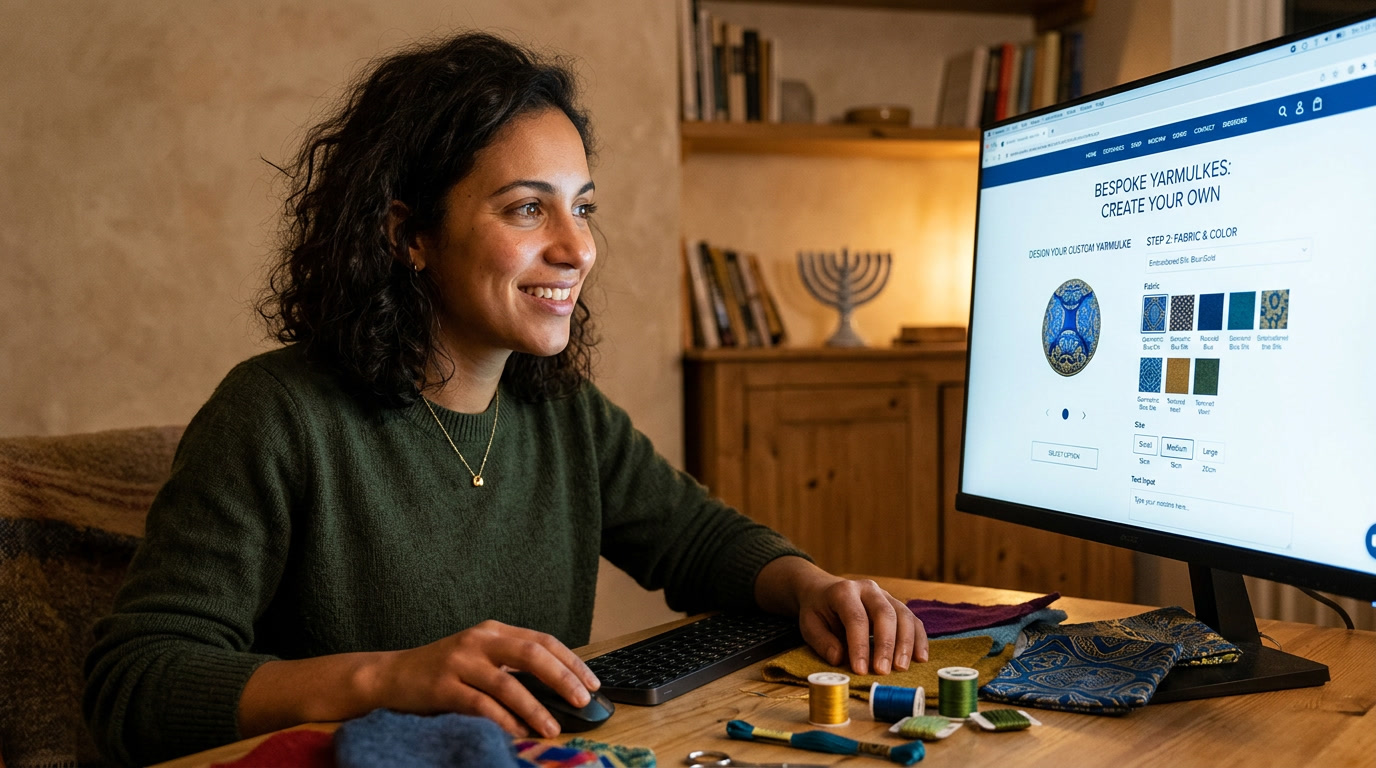
Okay, so you’re thinking about ordering a custom yarmulke online. Good call — honestly, it’s way easier than I thought it’d be when I first looked into it.
Here’s the thing: a custom kippah isn’t just another head covering. It’s something people actually keep. Like, years later they’re still pulling it out of a drawer and remembering your wedding or bar mitzvah. That hit is different, you know?
Anyway, I put this together because the whole process felt kinda overwhelming at first. Materials, colors, embroidery, timelines… where do you even start? So we’re gonna walk through it. From that first “oh, we should do custom kippot” moment all the way to the box showing up at your door.
Whether you’re planning a wedding, a bar mitzvah, or need something branded for your shul — same basics apply. Let’s get into it.
Why a Personalized Yarmulke Makes Your Event Special
Maybe it’s just me, but there’s something about handing someone a kippah with your name and date on it. It’s not just fabric — it’s a keepsake. People actually hold onto these things.
Elevate Weddings, Bar Mitzvahs, and Celebrations
For weddings? A set of coordinated kippot with the couple’s name and date… guests notice. They really do. And then they take them home. Use them for years. I’ve got a drawer full of them from different simchas — each one reminds me of who I was with that day.
Bar mitzvahs too. Same idea. You’re not just covering heads; you’re giving people something to remember the day by. It’s a small touch that goes a long way.
Promote Your Organization or Team Spirit
Here’s one I didn’t think about at first: synagogues and companies use these for branding. Embroider your logo, and suddenly every time someone wears it, you’ve got walking visibility. It’s marketing, yeah, but it doesn’t feel gross. It feels respectful.
Sports teams, clubs — same deal. Order a kippot with a team logo and you’ve got something people actually want to wear. Post-game, award night, whatever. Way better than another t-shirt.
Express Your Unique Style and Tradition
Your taste. Your colors. Your fonts. The whole design process can be a family thing — picking thread colors together, arguing over which Hebrew font looks better (we definitely did that). It’s kinda fun, actually.
And when you’re done? You’ve got something that actually reflects you. Not generic. Yours.
Design Your Perfect Custom Yarmulke in Three Simple Steps
It’s really three steps. Material. Design. Fit. That’s it. Sounds simple — and honestly, it is — but the choices matter.
Step 1: Choose Your Material and Color
Fabric first. Linen’s the classic for formal stuff — breathable, looks sharp. Cotton’s comfy for everyday. Suede if you want texture that stands out. And then there’s jersey and mesh — stretchy, stays put. I went with linen for our wedding; my cousin did suede for his bar mitzvah. Both worked great.
Colors? Black and white never fail. But royal blue, red, mint green… go bold if that’s your vibe. Match your theme or don’t. Your call.
Step 2: Select Your Design and Personalization
This is the fun part. Monograms, names, logos — whatever you want on there. Hebrew text, symbols, full-color embroidery. Most places let you mess around with fonts and thread colors online before you commit. Use it. We changed our mind like three times.
Step 3: Ensure the Perfect Fit with Included Features
Don’t skip the details. A good lining matters — satin or cotton inside makes a difference when you’re wearing it all day. And here’s something I wish I’d known sooner: look for the interior button hole. It’s for a kippah clip. Game changer. No more worrying about it sliding off during the hora. A lot of orders include the clips, which is nice.
Understanding the Order Process and Timeline
So you’ve designed your kippot. What happens next? Good question — I was nervous about this part too.
Approval of Your Design Sample
Before they make the whole batch, they’ll send you a sample. Usually by email. You get to see the real thing — colors, embroidery, everything — and approve it. Don’t rush this. Check it out. If something’s off, say so. They won’t run production until you give the okay.
Production Time and Rush Order Options
Timing depends on the material. Fabric stuff like linen or cotton? Plan on around 45 days. Suede tends to be faster — 2 to 3 weeks in a lot of cases. If you’re cutting it close, ask about rush orders. They can sometimes speed things up.
Minimum Orders and Final Delivery
Heads up: there are usually minimums. Fabric kippot might require 60 pieces in one style and color; suede is often 48. Just something to know before you get too far into the design.
Double-check your order before you submit. Quantities, spelling, shipping address. Trust me. And if you’re ordering internationally? You might get hit with customs or tariffs — that’s on the customer, not the vendor. Worth factoring in.
Once you’ve got the timeline straight, you can breathe. Your kippot’ll get there.
Begin Crafting Your Lasting Keepsake Today
Ready? Linen, cotton, mesh, plaid — there’s a lot out there. Upload your logo, pick your colors, and you’re basically there. The whole thing’s pretty straightforward once you dive in.
A good kippot comes with clips and a decent lining. Makes a difference. And hey — you can often get matching stuff too. Bags, Challah covers. Same embroidery, same vibe. Nice touch if you’re going all-in.

