
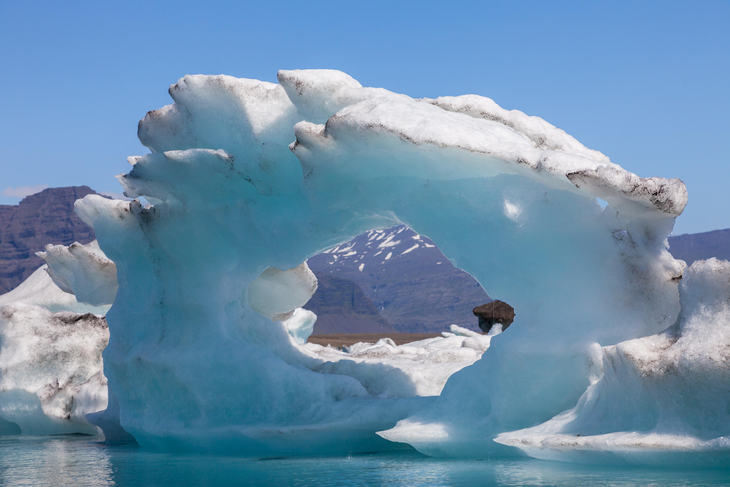
As global temperatures have risen, I have been forced to watch Iceland’s largest glacier, Vatnajökull shrink year after year. For Millenia, the Arctic’s ancient glaciers have kept polar regions and ocean temperatures cool. Glaciers have helped to moderate our global climate by reflecting around 80 percent of the sunlight back into space.
Today, almost all of Iceland’s glaciers are retreating and are predicted to disappear within the next two centuries.
We are facing fundamental changes to our way of life. Fishing communities are watching their livelihoods rapidly deplete; the rising and shifting ground is destroying our towns’ sewer pipes; we are facing up to a life without ice.
Already, the effects of melting glaciers are being felt across the globe. This includes cold winters for Texas and unpredictable monsoons for India. The UN has also warned of an increase in extreme weather events and higher temperatures.
Featured

Popular Sheffield Cafe is first to recognize Trade Union
Featured

BASC has a blast with colleges across the country
This “doom and gloom” is stuff we have, at this point, all heard before. It can be hard to get people to care about prioritising the planet, when news from abroad reports on the terrible events in Ukraine and all of its potential geopolitical consequences. At home, the UK is experiencing a cost-of living crisis, fuelled in no small measure by energy bills, in the early stages of a recovery from the pandemic.
A large share of the increase in energy bills has been caused by the spike in global gas prices, in part driven by the effects of Russia’s war with Ukraine. Although the UK is less dependent on Russian gas than its European counterparts, as it mainly sources its gas from Norway and the North, the UK remains vulnerable to volatile prices. There has never been an easier time to adopt climate friendly policies that reduce energy consumption and provide energy independence. This also provides insurance against geopolitical insecurity.
It may sound impossible, but it is possible. Iceland has been able to transition from being 80 to 100 percent dependent upon oil and coal in 1970s to being 100 to 100 percent dependent clean, hydro, and geothermal energy.
Today, all our electricity and heating comes from geothermic and hydroelectric plants. Our clean energy economy allowed us to survive Iceland’s banking collapse because it meant ordinary families still had domestically-sourced reliable and renewable sources of energy being delivered at low cost. We were also attractive for foreign investment because of our cheap energy. This allowed us to transform Iceland from a country that was dominated by sheep farming and fishing into a high-tech, modern economy. It also prevented millions of tonnes of carbon dioxide entering the atmosphere.
We were a success story that challenged the dominant view that countries should continue to rely on fossil fuels. In 40 years, we have proven that there is a way to transform energy and that clean energy can make economies more productive.
I acknowledge that Iceland’s experience is not something that can just be easily replicated. For starters, there are significant disparities between Iceland and the UK’s economy, and the UK does share the same opportunities to access hydro and geothermal energy. The UK has been plagued by a lack of commitment to their goals in its efforts to develop a transition towards clean, affordable energy.
A recent analysis from Carbon Brief shows UK energy bills are collectively £2.5 billion higher than if climate policies had not been scapegoated and cancelled over the last decade. It is a frustrating read.
As part of a pledge to ‘get rid of the green crap’, in 2013 the UK government cut spending on energy-efficiency improvements. This included the effort to insulate lofts and cavity walls. This resulted in a decrease of 92 and 74% respectively in the number homes taking these steps the year after, a fatal blow that it never recovered from.
In 2015, new windfarm construction was stopped by changes to planning regulations and a halt to subsidies for offshore wind. The growth of offshore windfarms is now at its lowest level in more than a decade.
The zero carbon homes policy – an effort to ensure all new homes built from 2016 would generate, through wind and solar power and other technologies, at least as much energy as they used – was also dumped just before it was due to start, leading to roughly a million new homes being built by developers since then that are held to lower standards and therefore suffer higher energy bills.
The UK has been at the forefront in global innovation, investing in and developing new technologies to address the world’s problems. It has many options available, including nuclear, wind, and solar options.
With the prize of clean energy independence on the horizon, families and the UK Government must be excited about the possibility of low energy bills for their families and businesses.
The most efficient and painless way to end the climate crisis is to invest in clean energy and sustainable growth. Each pound spent on protecting nature will yield a fourfold return in the long-term. Rapid, transformative change can be achieved by making full use of existing clean technologies and investing in innovative solutions that will enable us to build the technologies of tomorrow.
As Chair of The Jury for the Zayed Sustainable Prize, a global award offering millions of pounds in cash prizes for small and medium-sized enterprises, NGOs, and high school students for innovative, inspiring and sustainable solutions, I’ve seen it first-hand.
I wish to leave you with the recent words of the UN Secretary-General Antonio Guterres: “Climate activists are often portrayed as dangerous radicals. But countries that increase their production of fossil-fuels are the most dangerous radicals.

